Table of Contents
- Trump Endorses Putin’s One-Year Extension
- What Is the New START Treaty?
- Why Russia Is Pushing for an Extension
- Obstacles to a Lasting Agreement
- What Happens Next?
- Sources
Trump Endorses Putin’s One-Year Extension
In a surprising move that could signal a rare diplomatic opening between Washington and Moscow, former President Donald Trump has publicly backed a proposal from Russian President Vladimir Putin to extend nuclear arms limits for one more year.
“It sounds like a good idea to me,” Trump said on Sunday, referring to Putin’s recent suggestion to prolong the existing caps on long-range nuclear weapons beyond the February 2026 expiration of the New START treaty.
The Kremlin quickly welcomed the endorsement. Kremlin spokesman Dmitri S. Peskov called Trump’s comments “grounds for optimism,” suggesting that even amid the ongoing war in Ukraine, both superpowers might find common ground on nuclear restraint.
What Is the New START Treaty?
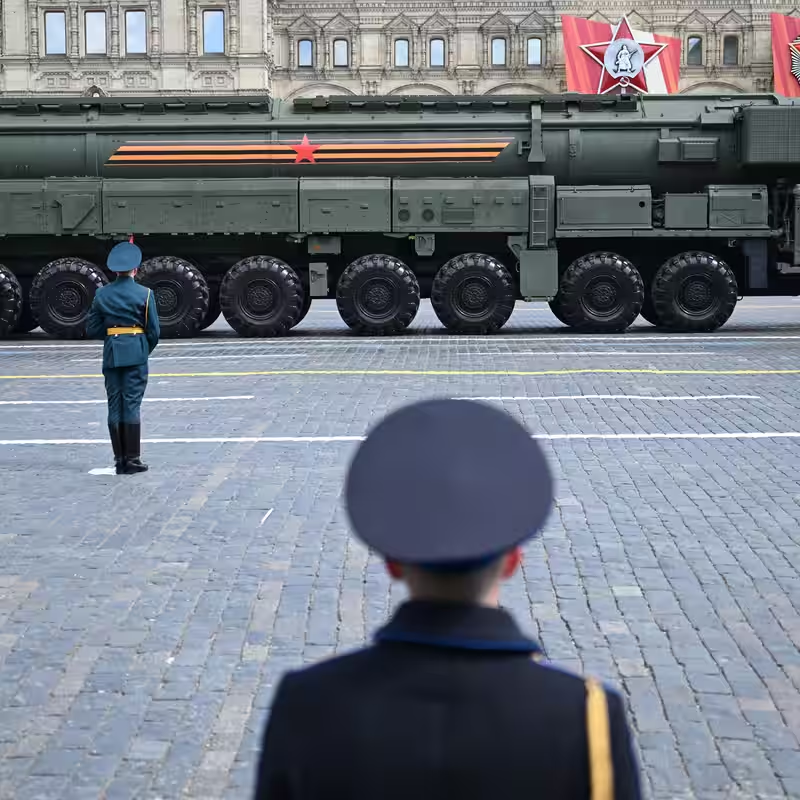
Originally signed in 2010 by Presidents Barack Obama and Dmitry Medvedev, the New START treaty limits each country to:
- 1,550 deployed nuclear warheads
- 700 deployed intercontinental ballistic missiles (ICBMs), submarine-launched ballistic missiles (SLBMs), and heavy bombers
- 800 total launchers and bombers (deployed or not)
The pact was extended once in 2021 under President Joe Biden—but under its terms, that was the final allowable extension. Any further continuation would require a brand-new agreement, complete with Senate ratification (a two-thirds majority).
Current Status: A Treaty in Name Only?
Despite both sides still honoring the numerical caps, much of the treaty’s verification framework has collapsed:
| Component | Status |
|---|---|
| On-site inspections | Suspended since 2020 (Covid), never resumed |
| Data sharing | Russia halted in 2023; U.S. followed suit |
| Warhead limits | Still informally observed |
Why Russia Is Pushing for an Extension
For Moscow, extending the treaty—even temporarily—offers multiple strategic advantages:
- Economic relief: Russia’s defense budget, while still massive (38% of federal spending), is set to shrink in 2026 amid war-related strain and sanctions.
- Diplomatic leverage: The Kremlin hopes to open non-Ukraine negotiation channels with Washington.
Without caps, both nations could be forced into costly modernization spirals.
Obstacles to a Lasting Agreement
Despite Trump’s openness, major hurdles remain:
- The treaty doesn’t cover short-range or tactical nuclear weapons—a growing concern in Europe.
- Putin has not committed to restoring inspections or data transparency.
- U.S. domestic politics: Any new treaty would need Senate approval in a deeply divided Congress.
- Ukraine war remains the elephant in the room—Trump has refused major deals while Putin continues hostilities.
What Happens Next?
If both sides agree to honor the New START limits through early 2027, it would buy time for deeper negotiations. But without restoring verification mechanisms, the arrangement would remain fragile—a “gentleman’s agreement” in an era of deep mistrust.
Analysts warn that letting the treaty expire without a successor could mark the first time since 1972 that the U.S. and Russia operate without any binding nuclear arms control—a dangerous precedent.
Sources
The New York Times: Kremlin Welcomes Trump’s Blessing of Proposal to Extend Nuclear Caps