Table of Contents
- Background: A Nation Rebuilding Amid Tensions
- Deadly Clashes in Aleppo
- Kurdish Resistance and the SDF’s Stance
- President Shara’s Tightrope Walk
- Ceasefire and What Comes Next
- Sources
Background: A Nation Rebuilding Amid Tensions
Fourteen years after Syria’s civil war began—and just ten months after the fall of longtime dictator Bashar al-Assad—the country stands at a crossroads. The new government, led by President Ahmed al-Shara, is racing to unify a fractured nation. But one major obstacle remains: the Kurdish-led autonomous region in northeastern Syria.
Since the collapse of Assad’s regime, minority groups across Syria have carved out zones of self-rule. Among them, the Kurdish-led Syrian Democratic Forces (SDF) have maintained de facto control over vast swaths of the northeast—a region rich in oil and agricultural resources.
Deadly Clashes in Aleppo
Tensions boiled over on Monday night in Aleppo, Syria’s second-largest city, when Syrian government forces and SDF fighters exchanged heavy gunfire. According to the state-run news agency SANA, the violence left at least one soldier and one civilian dead.
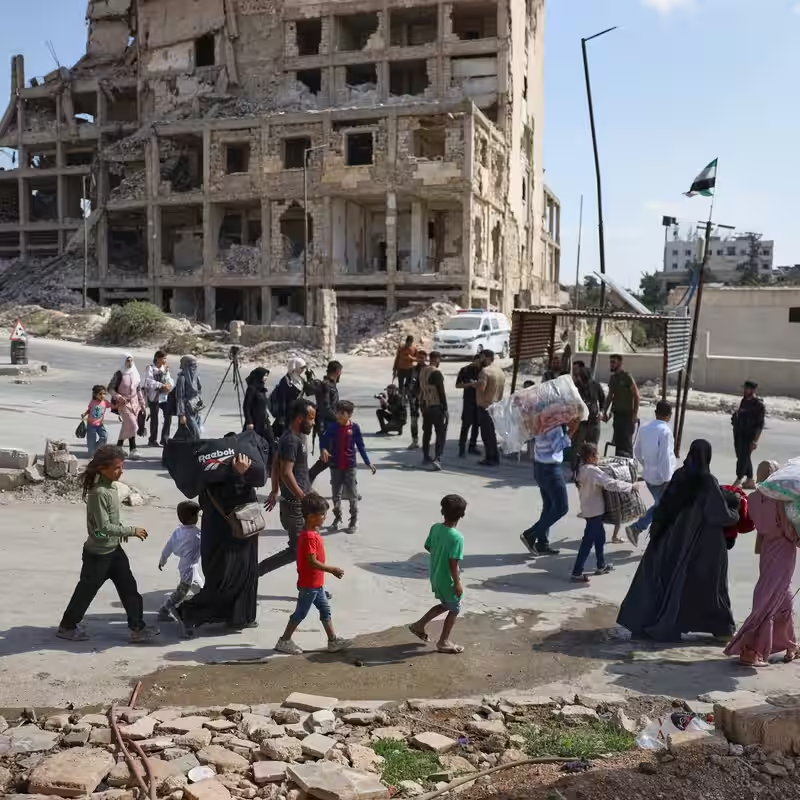
The incident marks one of the most serious confrontations between Damascus and the SDF since the new administration took power. Eyewitnesses described scenes of panic as families fled the area, some clutching hastily packed belongings.
Kurdish Resistance and the SDF’s Stance
Kurdish leaders have consistently resisted efforts by the central government to absorb their territories. While negotiations have been ongoing for months, progress has stalled over key issues: security autonomy, political representation, and control of local resources.
The SDF, once a key U.S.-backed ally in the fight against ISIS, now finds itself navigating a precarious relationship with a government that insists on a “monopoly of force” across all Syrian territory.
President Shara’s Tightrope Walk
Ahmed al-Shara, Syria’s new president, faces mounting pressure. Critics accuse him of mishandling unrest in other minority-dominated regions, including Druze and Alawite areas. A full-blown conflict with the Kurds could derail his fragile unity agenda—and deepen the country’s instability.
“The government has no intention of any military escalation,” said Aleppo Governor Azzam al-Gharib in a Facebook post shortly after the clashes. Still, many remain skeptical, especially given the military’s recent troop movements near SDF-held zones.
Ceasefire and What Comes Next
By Tuesday morning, calm had returned to Aleppo. The Syrian defense minister announced a ceasefire following emergency talks between government and SDF representatives. While the truce holds—for now—analysts warn that without a political breakthrough, violence could reignite at any moment.
The coming weeks will be critical. Will Damascus offer meaningful concessions to Kurdish leaders? Or will it double down on centralization, risking another front in Syria’s long-running conflict?