Trump’s 20-point Gaza peace plan has suddenly become the center of global attention after Israel and Hamas agreed to a breakthrough hostage-prisoner exchange deal. With the two-year war in Gaza showing its first real signs of winding down, the world is asking: What’s actually in this plan—and can it deliver lasting peace?
What Is Trump’s 20-Point Gaza Peace Plan?
Unveiled in late September 2025, Trump’s 20-point Gaza peace plan is a sweeping proposal aimed at ending the brutal conflict that began on October 7, 2023. Brokered with help from Qatar, Egypt, and Turkey, the plan outlines a phased approach to ceasefire, reconstruction, governance reform, and regional security.
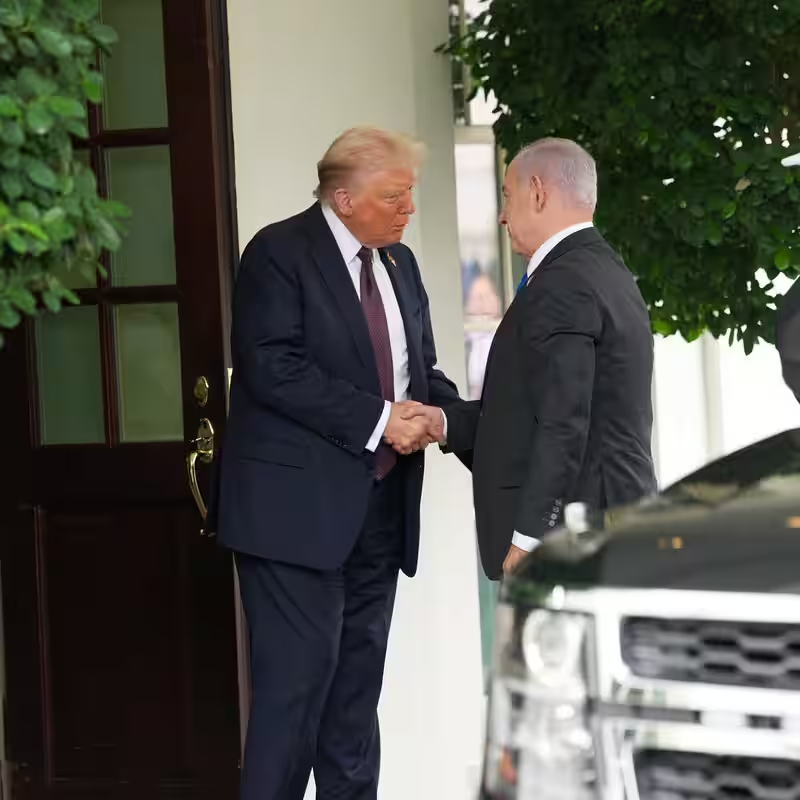
President Trump hailed the agreement as “historic and unprecedented,” claiming it could bring “peace to the Middle East.” But while the first phase—hostage release and Israeli troop pullback—has been accepted by both sides, major sticking points remain unresolved.
Key Pillars of the Plan
- Immediate ceasefire and hostage release: All ~20 living Israeli hostages to be freed at once; remains of up to 28 deceased hostages returned in stages.
- Prisoner exchange: Israel to release 250 Palestinians serving life sentences and 1,700 Gazans detained since Oct. 7, 2023.
- Israeli troop withdrawal: IDF to pull back to an agreed line—though Israel has not publicly confirmed this detail yet.
- Hamas disarmament: The militant group must lay down arms—a condition it has historically rejected.
- New Gaza governance: Hamas would be replaced by a “technocratic, apolitical Palestinian committee” overseen by a U.S.-led “Board of Peace.”
- Reconstruction & economic zone: A special economic zone with preferential trade terms and international investment to rebuild Gaza.
- International Stabilization Force: A temporary multinational force to train Palestinian police and secure borders alongside Egypt and Jordan.
Why This Plan Is Different
Unlike past ceasefire attempts, Trump’s proposal ties humanitarian relief directly to political and security reforms. It avoids forced displacement—abandoning Trump’s earlier controversial suggestion to relocate Gazans—and instead encourages residents to stay and rebuild.
Crucially, the plan does not guarantee a Palestinian state. Instead, it says statehood could become possible only after Gaza is “de-radicalized” and the Palestinian Authority completes a reform program.
Table: Trump’s Gaza Plan at a Glance
| Component | Details |
|---|---|
| Hostage Release | ~20 living hostages + remains of 28 others |
| Prisoners Freed by Israel | 250 life-sentence inmates + 1,700 post-Oct 7 detainees |
| Gaza Governance | Technocratic committee under “Board of Peace” (Trump as chair, Tony Blair involved) |
| Security | Hamas must disarm; International Stabilization Force deployed |
| Reconstruction | Special economic zone, international funding, no forced displacement |
Challenges Ahead
Despite the optimism, major hurdles remain. Hamas has not agreed to disarm or relinquish political control. Israel’s far-right coalition members oppose any withdrawal that doesn’t include total Hamas destruction. And the Palestinian Authority, weakened by corruption allegations, may struggle to implement reforms.
Still, families of hostages are celebrating. Pushpa Joshi, sister of Nepali student Bipin Joshi abducted on Oct. 7, said: “I am faithful that I will be able to see my brother’s smiling face.”
Canadian Prime Minister Mark Carney called the deal “a turning point,” while U.S. officials praised Trump’s “tireless dedication.” Even Democratic Senator John Fetterman commended the president, noting their “shared ironclad commitment to Israel.”
What Happens Next?
The first phase could unfold as early as Sunday, with hostages released and aid flowing into Gaza. But long-term success hinges on whether both sides honor the deeper terms—especially Hamas’s disarmament and Israel’s full withdrawal.
As Montaser Bahja, a displaced teacher in Khan Younis, put it: “Joy for the end of the war… and sorrow for everything we’ve lost.” For millions, this plan offers the first real hope in two years.