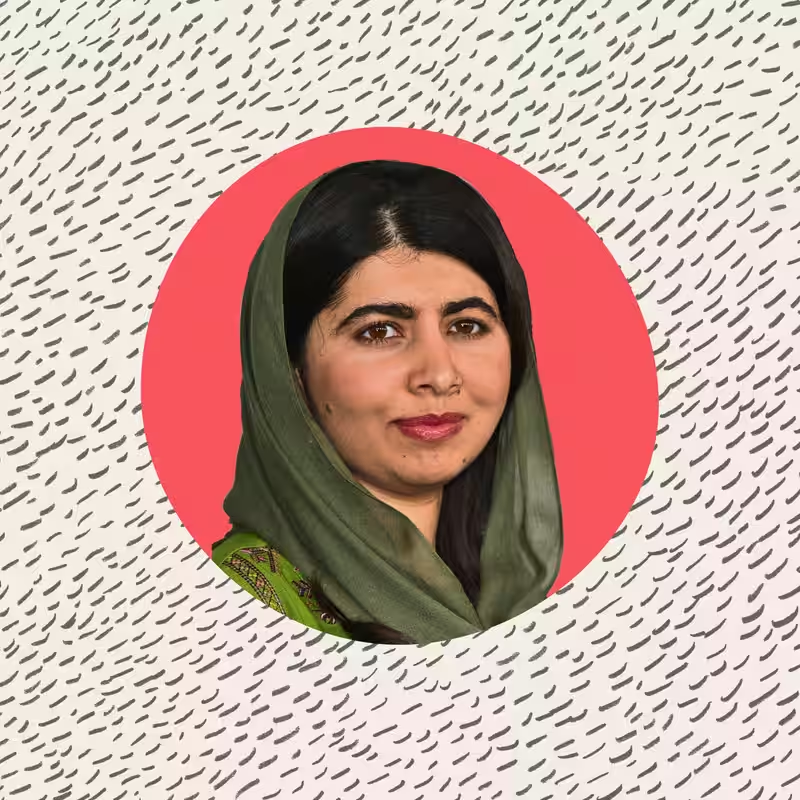
In a deeply personal revelation that has captivated readers and listeners alike, Nobel laureate and global education activist Malala Yousafzai has shared intimate details about her fears, hopes, and evolving views on love and marriage in her new memoir. In a candid conversation with The New York Times for its Modern Love podcast, Malala confessed: “For a long time, I thought I’d never fall in love.”
From Survival to Self-Discovery
Known worldwide for her fearless advocacy for girls’ education—and for surviving a Taliban assassination attempt at age 15—Malala reveals a side rarely seen in headlines. Her memoir delves into the emotional aftermath of trauma, including recurring panic attacks, identity struggles, and the pressure of living under a global spotlight from her teenage years.
“After the attack, I wasn’t just healing my body—I was trying to understand who I was beyond ‘the girl who was shot,’” she said. “For years, I poured everything into my mission. Love felt like a luxury I couldn’t afford—or even imagine.”
Rethinking Marriage and Love
Malala grew up in Pakistan’s Swat Valley, where traditional gender roles often define women’s lives. Early on, she associated marriage with restriction—not partnership. “I saw marriage as the end of a girl’s dreams,” she admitted. “So I told myself I’d never do it.”
But as she traveled the world, met diverse couples, and matured into her 20s, her perspective shifted. “I realized love doesn’t have to silence you—it can amplify you,” she shared. “A true partner walks beside you, not in front or behind.”
Malala’s Journey: Key Personal Milestones
| Age | Milestone | Emotional Insight |
|---|---|---|
| 15 | Survived Taliban attack | “I lost my childhood—but found my voice.” |
| 17 | Became youngest Nobel Peace Prize laureate | “The world saw a symbol. I just wanted to be Malala.” |
| 23 | First serious relationship | “I learned it’s okay to be vulnerable.” |
| 27 | Releases memoir on love and identity | “My activism and my heart can coexist.” |
Finding Her Personal Style—Inside and Out
Beyond emotional growth, Malala also spoke about her evolving sense of style—a blend of her Pashtun heritage and modern global citizenry. She now embraces colorful shalwar kameez with bold prints, often paired with sneakers or minimalist jewelry. “Fashion became another way to say: I’m not just a cause. I’m a woman with taste, joy, and contradictions,” she said with a laugh.
Why This Matters
Malala’s openness about mental health, love, and self-doubt humanizes a figure often placed on a pedestal. For millions of young women—especially in conservative societies—her journey offers permission to dream beyond duty, to seek both purpose and personal happiness.
“You don’t have to choose between changing the world and having a heart,” she said. “In fact, love might be the thing that keeps you fighting.”