Trump-Xi Trade Truce Shakes Global Markets
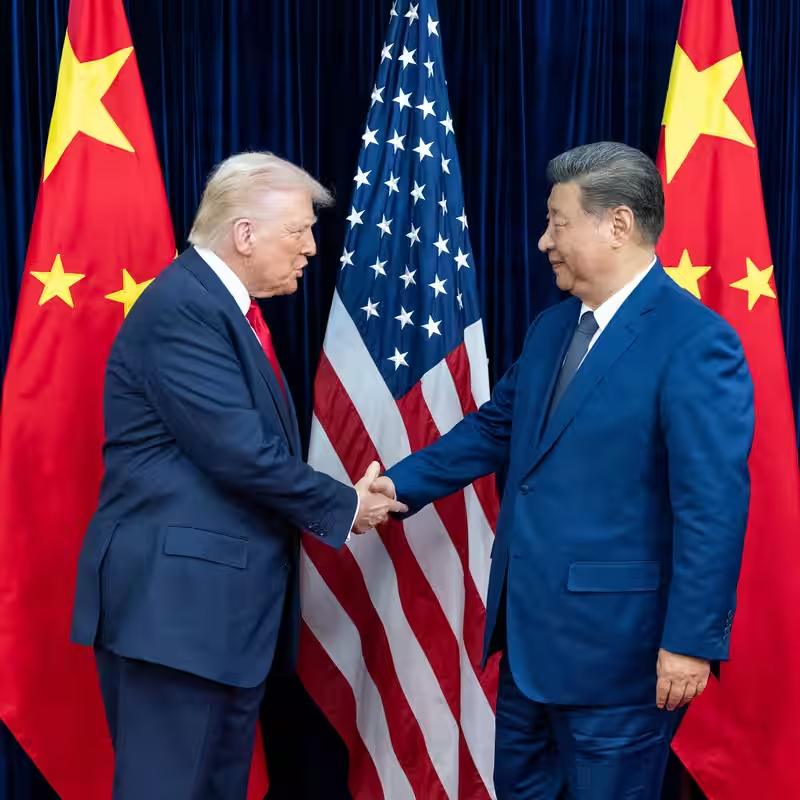
In a dramatic face-off in Busan, South Korea, President Donald Trump and Chinese President Xi Jinping have agreed to a yearlong trade truce—pausing one of the most volatile economic standoffs of the past decade.
What’s in the Trade Truce?
The deal, struck during their first in-person meeting since Trump reignited the U.S.-China trade war, includes several key concessions:
- China will postpone strict export controls on rare earth minerals for one year.
- The U.S. will halve tariffs—from 20% to 10%—on certain Chinese goods linked to fentanyl trafficking concerns.
- China pledged to buy “massive amounts” of American soybeans, a win for U.S. farmers.
- Both nations agreed to freeze tit-for-tat tariff escalations through 2026.
Overall U.S. tariffs on Chinese goods will now hover around 47%, according to Trump.
Why Rare Earth Minerals Matter
Rare earth elements—used in everything from smartphones to fighter jets—are a strategic linchpin. China controls roughly 60% of global production and over 85% of refining capacity. Tightening export rules gave Beijing significant leverage, which Trump sought to neutralize through this truce.
A Tense Handshake, A High-Stakes Gamble
The mood was anything but calm before the deal. Just hours before the meeting, Trump posted on social media that the U.S. would resume nuclear weapons testing for the first time in over 30 years—a move widely interpreted as a pressure tactic.
Xi remained silent during the public portion of the summit, letting Trump do most of the talking. After 90 minutes behind closed doors, however, both leaders emerged with what Trump called a “12 out of 10” agreement.
Broader Trade Wins Across Asia
The China deal capped a whirlwind six-day tour where Trump secured multiple trade pacts:
| Country | Key Agreement |
|---|---|
| South Korea | $200B investment + $150B for U.S. shipbuilding; Boeing order for 103 planes; U.S. tariffs cut to 15% |
| Japan | $550B investment in U.S. (AI, nuclear energy); tariff reductions |
| Thailand | Order for 80 U.S. aircraft; cooperation on rare mineral supply chains |
| Malaysia | $70B U.S. investment pledge; alignment on export controls |
Global Reactions and Skepticism
While Trump hailed the truce as a “massive win,” economists remain cautious. “One-year pauses don’t fix structural imbalances,” said Ana Swanson, New York Times trade correspondent. “This is damage control, not a long-term strategy.”
Markets reacted positively in the short term, with U.S. agri-stocks and semiconductor shares climbing. But analysts warn that without deeper reforms—on intellectual property, state subsidies, or supply chain resilience—the truce may only delay the next crisis.
What Comes Next?
The truce buys time, but not solutions. With U.S. elections looming and China facing internal economic headwinds, both leaders have incentives to avoid escalation—for now.
As one White House aide put it: “Trump came for deals. He got headlines. Whether it lasts? That’s someone else’s problem.”