Table of Contents
- What Is ‘Bluetoothing’?
- How Blood-Sharing Drives HIV Transmission
- Global Hotspots of the Epidemic
- Why This Trend Is So Dangerous
- Public Health Response and Challenges
- What Experts Are Saying
- Sources
What Is ‘Bluetoothing’?
In a disturbing twist on drug culture, a practice known as “bluetoothing” is fueling a surge in HIV infections across multiple continents. Despite its tech-inspired name, the term has nothing to do with wireless devices—it refers to the act of injecting blood from an already intoxicated person directly into one’s own bloodstream to experience the same high instantly.
Originating in underground drug scenes in Southeast Asia and now spreading rapidly through South Africa and parts of the Pacific, bluetoothing bypasses traditional drug ingestion methods. Users believe it offers a faster, more intense, and “purer” high—especially when pharmaceutical-grade drugs like methamphetamine or opioids are scarce.
How Blood-Sharing Drives HIV Transmission
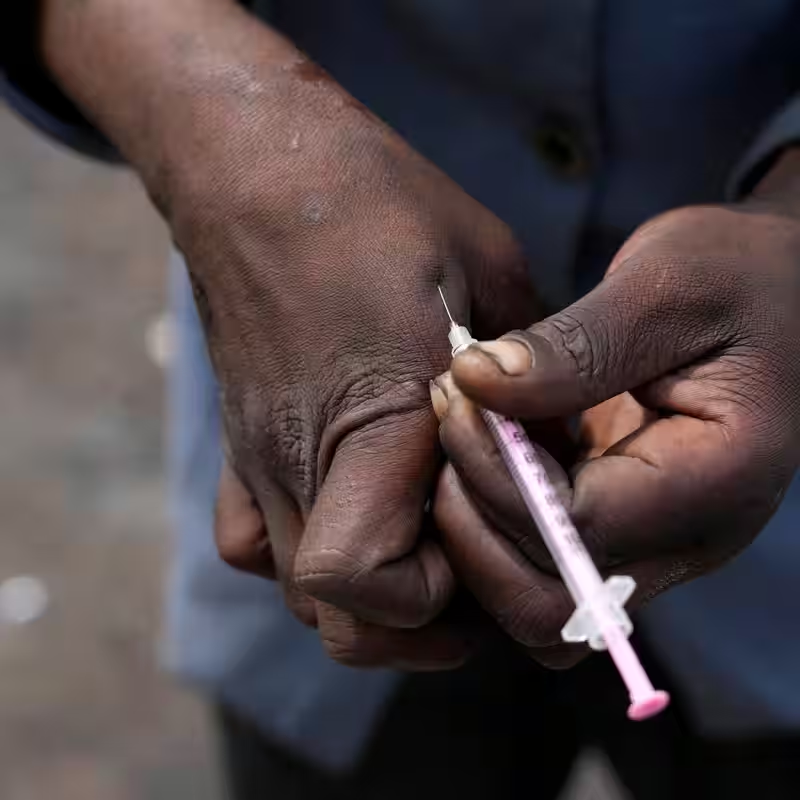
Because the practice involves direct blood-to-blood contact—often with shared, unsterilized syringes—it creates a perfect vector for bloodborne viruses. HIV, hepatitis B, and hepatitis C can all spread in seconds.
“This isn’t just risky behavior—it’s biological Russian roulette,” said Dr. Lena Moyo, an epidemiologist with the World Health Organization. “One infected person can seed dozens of new cases in a single session.”
In communities where HIV prevalence among people who inject drugs already exceeds 20%, bluetoothing acts as an accelerant—turning localized outbreaks into full-blown epidemics.
Global Hotspots of the Epidemic
| Region | Reported Cases (2023–2025) | HIV Increase Linked to Bluetoothing |
|---|---|---|
| Philippines | 1,200+ | 340% rise in young adults |
| Thailand | 850+ | 210% increase since 2023 |
| South Africa (Western Cape) | 2,100+ | HIV among injectors doubled in 18 months |
| Papua New Guinea | 400+ | First major outbreak linked to blood-sharing |
Why This Trend Is So Dangerous
Unlike needle-sharing—which public health campaigns have targeted for decades—bluetoothing is rarely discussed, even among harm reduction workers. Many users don’t consider it “drug use” in the traditional sense, so they don’t seek testing or prevention services.
Compounding the risk: the high wears off quickly, leading users to repeat the process multiple times in a single night—each time with a new donor or shared syringe.
“They think they’re just ‘borrowing’ a feeling,” said community health worker Thabo Nkosi in Cape Town. “But they’re borrowing someone else’s virus too.”
Public Health Response and Challenges
Efforts to curb the trend face major hurdles. In many affected countries, drug use remains criminalized, driving users underground and away from testing sites. Stigma around both HIV and substance use further silences at-risk communities.
Some cities have begun pilot programs offering on-the-spot HIV testing at harm reduction centers, along with education about the specific dangers of blood-sharing. Mobile outreach teams in Manila and Durban now carry “bluetoothing awareness kits” that include visual aids and clean syringes—but demand far outstrips supply.
“We need to name it, shame it, and stop it—but with compassion, not punishment,” said UNAIDS regional director Amina Jallow.
What Experts Are Saying
Dr. Carlos Lim, an addiction specialist in Manila, calls bluetoothing “the most efficient HIV transmission method we’ve seen outside of transfusion errors.”
Meanwhile, researchers at the London School of Hygiene & Tropical Medicine warn that without immediate intervention, the practice could reverse two decades of global progress in HIV prevention.
“This isn’t a fringe issue,” Dr. Lim added. “It’s a ticking time bomb.”