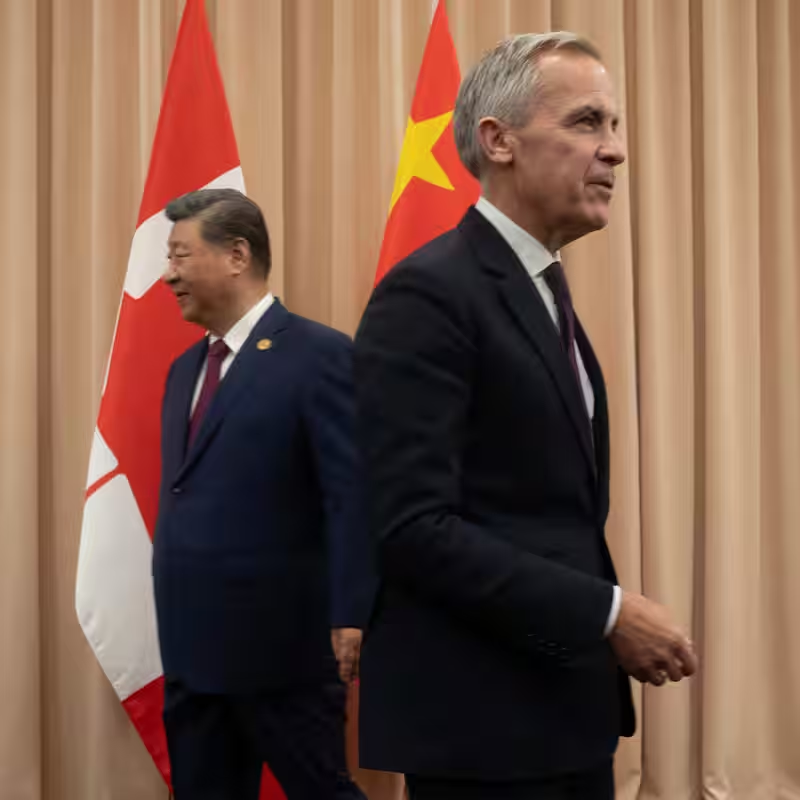
In a significant geopolitical pivot, Canadian Prime Minister Mark Carney has initiated a diplomatic thaw with China, meeting President Xi Jinping in Beijing following years of strained relations. The high-stakes encounter marks a clear shift in Canada’s foreign policy—one shaped as much by global realignment as by domestic economic necessity.
Why Canada Is Turning to China Now
The Canada-China relationship hit a deep freeze during the Trump administration, when Ottawa found itself caught between U.S. pressure and its own trade interests. The 2018 arrest of Huawei executive Meng Wanzhou in Vancouver—done at Washington’s request—triggered retaliatory detentions by Beijing and a years-long diplomatic chill.
Now, with Donald Trump’s influence receding and global supply chains in flux, Prime Minister Carney is signaling that Canada can no longer afford to let this critical partnership languish. “We need stable, pragmatic engagement with all major economies,” Carney told reporters after the meeting. “China is not just a market—it’s a strategic reality.”
What Was Discussed in the Carney-Xi Meeting?
While full details remain under wraps, sources familiar with the talks say the agenda covered:
- Resumption of agricultural exports (especially canola and pork)
- Cooperation on critical minerals for clean energy tech
- Student and academic exchange programs
- De-escalation of consular disputes
Notably absent? Human rights criticisms that once dominated Canada’s public stance. Analysts say Carney is prioritizing quiet diplomacy over performative condemnation—a move that’s drawing both praise and concern at home.
Economic Urgency Behind the Thaw
Canada’s economy has felt the pinch. Chinese import restrictions cost Canadian farmers an estimated $2.3 billion between 2019 and 2024. Meanwhile, China’s demand for lithium, graphite, and nickel—key to EV batteries—aligns perfectly with Canada’s mineral-rich geology.
| Year | Bilateral Trade (CAD) | Key Disruption |
|---|---|---|
| 2019 | $87 billion | Meng Wanzhou arrest; Chinese sanctions |
| 2022 | $105 billion | Pandemic recovery; partial reopening |
| 2024 | $92 billion | Ongoing trade barriers |
| 2025 (projected) | $110+ billion | Post-Carney/Xi thaw |
A Calculated Move in a Multipolar World
Carney’s outreach isn’t just about trade—it’s about sovereignty. With U.S. politics growing increasingly unpredictable, Canada is hedging its bets. “Relying solely on Washington is no longer a viable long-term strategy,” said Dr. Lena Cho, a foreign policy expert at the University of Toronto. “Carney is rebuilding optionality.”
Still, the balancing act is delicate. Canada remains a NATO ally and Five Eyes intelligence partner. Any perceived tilt toward Beijing could trigger backlash in Washington and among domestic critics wary of China’s authoritarian governance.
What Comes Next?
Officials say a Canada-China ministerial dialogue will relaunch by early 2026, and Chinese investment in Canadian critical mineral projects may resume under stricter oversight. For now, the Carney-Xi handshake symbolizes more than diplomacy—it’s a declaration that Canada intends to chart its own course in a fractured world order.