In the aftermath of the devastating 6.2-magnitude earthquake that struck Cebu, Philippines, on October 3, 2025, rescuers faced a heartbreaking paradox: some of the homes that crumbled—and trapped families inside—were specifically designed to withstand natural disasters.
When Safety Becomes a Trap
Among the rubble in barangays like Guadalupe and Mambaling, emergency teams pulled survivors from the wreckage of houses labeled “earthquake-resilient” under government housing programs. These structures, built with reinforced concrete and approved by local engineers, were supposed to offer refuge—not risk.
“We followed every guideline,” said Maria Lourdes Tan, 58, whose husband remains missing under what was once their “safe house.” “They told us it could handle a 7.0. It didn’t even survive a 6.2.”
What Went Wrong?
Early investigations point to a mix of factors:
- Substandard materials: Contractors allegedly used weaker rebar and diluted concrete mixes to cut costs.
- Poor oversight: Inspections were rushed or skipped entirely in fast-tracked post-typhoon rebuilding efforts.
- Soil instability: Some homes were built on reclaimed or landslide-prone land never properly assessed.
The Philippine Institute of Volcanology and Seismology (PHIVOLCS) confirmed the quake’s epicenter was shallow—just 10 kilometers deep—amplifying surface shaking even in areas with modern construction.
A Pattern of Broken Promises
This isn’t the first time “disaster-resilient” housing has failed. After Typhoon Haiyan in 2013, similar complaints emerged about homes that washed away in moderate storms. Critics say corruption and lack of enforcement have turned safety standards into paperwork exercises.
“Certified doesn’t mean safe,” said civil engineer Rey Malonzo, who inspected several collapsed units. “It just means someone signed a form.”
Community in Mourning—and Anger
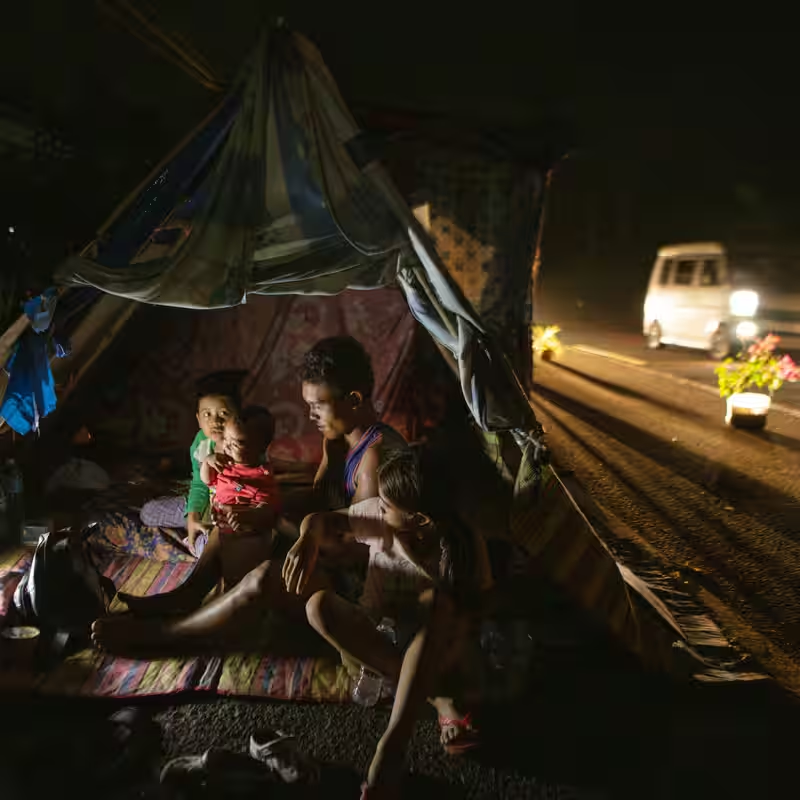
As of Sunday, at least 23 people have died in Cebu province, with dozens more injured and missing. Makeshift memorials now dot neighborhoods where families once felt secure.
Local officials have promised a full audit of all government-built housing in the region. But for many survivors, trust has already collapsed—right along with their walls.