Table of Contents
- Darfur Crisis 2025: A Nightmare Reborn
- Who Is Behind the Violence?
- Eyewitness Accounts from El Fasher
- Global Inaction and Moral Failure
- What Happens Next for Darfur?
- Sources
Darfur Massacres Return: A Nightmare Reborn
Two decades after Darfur became synonymous with genocide and global indifference, the region is once again descending into unspeakable horror. In late October 2025, the city of El Fasher—the last major stronghold in North Darfur—fell to the Rapid Support Forces (RSF), unleashing a wave of massacres that echo the atrocities of the early 2000s.
Survivors fleeing the violence describe scenes of chaos: families gunned down in fields, hospitals turned into slaughterhouses, and entire neighborhoods erased. The World Health Organization (WHO) reports that hundreds were killed in a single day inside El Fasher’s last functioning medical facility.
Who Is Behind the Violence?
The RSF, a paramilitary group with roots in the infamous Janjaweed militias, is once again at the center of ethnic violence in Darfur. Originally mobilized by the Sudanese government during the 2003–2005 conflict, the Janjaweed were accused of committing genocide against non-Arab communities. Today’s RSF, though rebranded and integrated into state security structures in recent years, appears to be repeating history.
Ethnic tensions between Arab and non-Arab groups—long exploited by successive regimes in Khartoum—have flared anew amid Sudan’s broader civil war, which erupted in April 2023 between the Sudanese Armed Forces and the RSF.
Eyewitness Horror from El Fasher
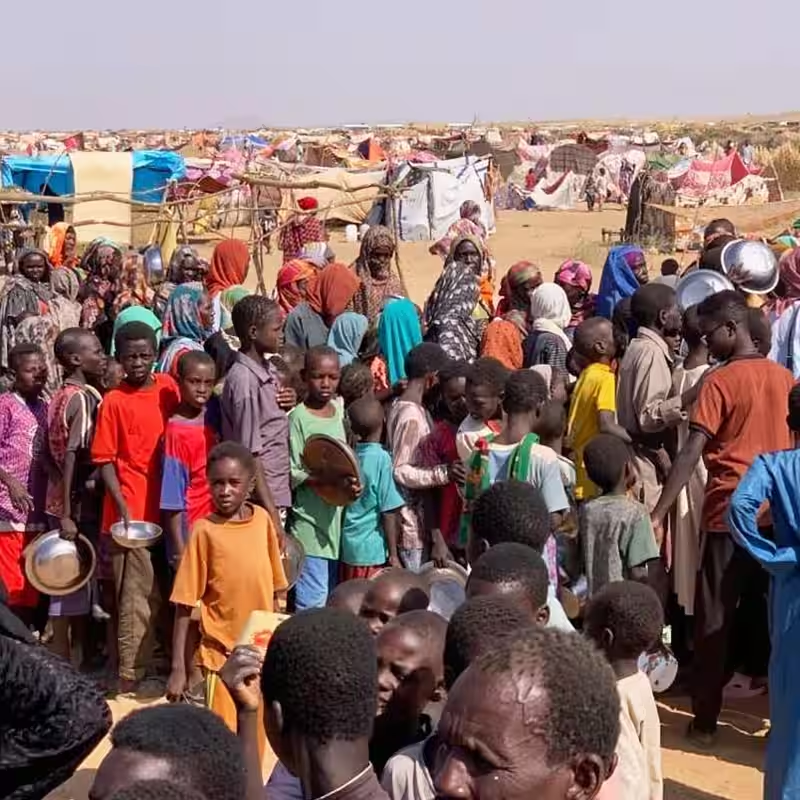
Those who managed to escape El Fasher trek 40 miles to Tawila, where a handful of international aid organizations still operate. Their testimonies paint a grim picture:
- Men executed in front of their families
- Women and children denied food and water during sieges
- Hospitals shelled and medical staff targeted
- Mass graves reported on the outskirts of the city
Graphic videos circulating on social media show RSF fighters executing civilians with chilling nonchalance—footage that human rights groups say could constitute war crimes.
Global Inaction and Moral Failure
Despite early warnings from humanitarian agencies and repeated pleas from Darfuri civil society, the international community has largely remained silent. The United Nations Security Council has not convened an emergency session. Western powers cite “competing global crises”—from Ukraine to Gaza—as reasons for muted responses.
Critics argue this is not just diplomatic fatigue—it’s a moral abdication. “We said ‘never again’ in 2004,” said one aid worker in Chad, who asked to remain anonymous. “Now we’re watching it happen again, in real time, with even less outrage.”
What Happens Next for Darfur?
With El Fasher under RSF control, humanitarian access to North Darfur has collapsed. Over 2 million people are now cut off from food, medicine, and safe shelter. Aid groups warn of imminent famine and disease outbreaks.
Meanwhile, displaced families continue to pour into makeshift camps in Tawila and across the border in Chad. Without urgent intervention, analysts fear Darfur could spiral into a full-scale humanitarian catastrophe rivaling the worst years of the 2000s conflict.
Sources
The New York Times: Twenty Years On, Darfur Tips Into Chaos Again