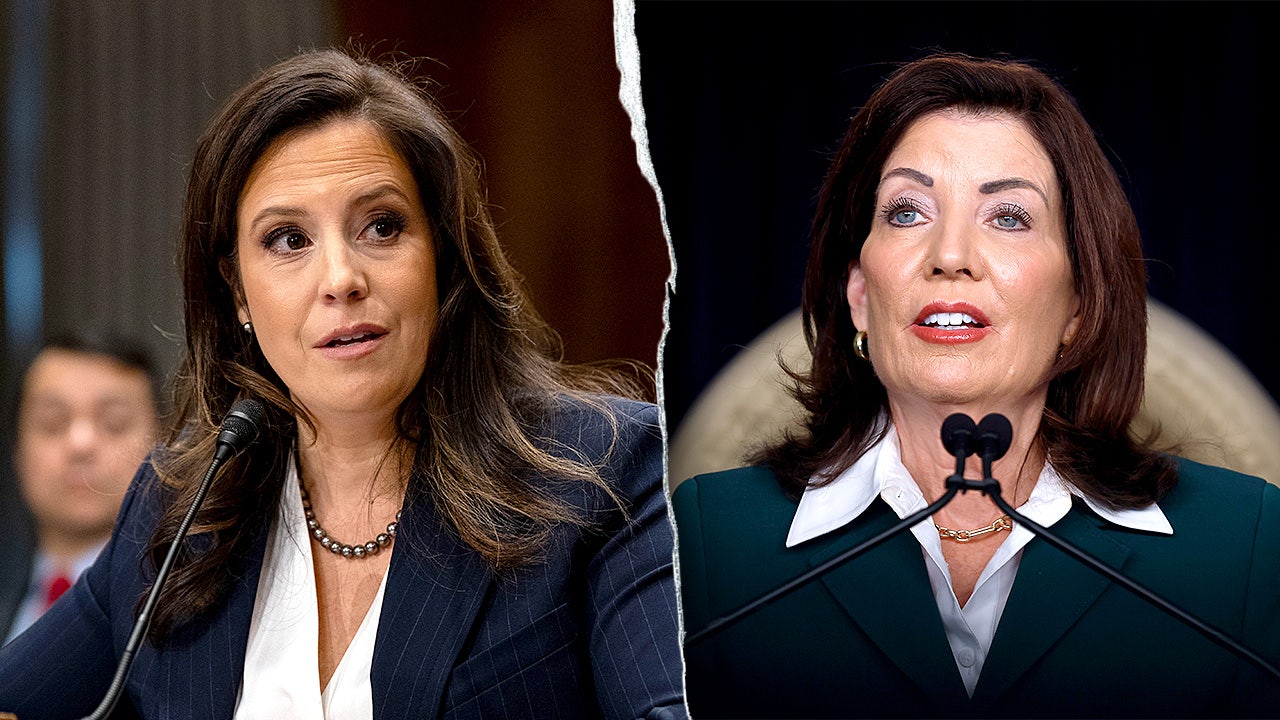
ALBANY, N.Y. — As New Yorkers brace for an estimated $800 annual increase in utility bills, energy affordability has surged to the forefront of the 2026 gubernatorial race. Republican Congresswoman Elise Stefanik, recently declared candidate for governor, has launched a blistering critique of Democratic Governor Kathy Hochul’s energy policies, framing them as economically devastating and out of touch with everyday residents.
Stefanik’s campaign seized on a recent Public Service Commission decision that allows sharp hikes in utility delivery charges, a move expected to cost the average household nearly $800 more per year. Rather than accept Hochul’s explanation that federal tariffs and global market shifts are to blame, Stefanik argues the governor’s domestic energy choices—like maintaining New York’s ban on hydraulic fracturing and overreliance on unproven grid-scale renewable infrastructure—are the true cause of the crisis .
“Kathy Hochul has made New York the most unaffordable state in the nation, and her energy policies are a textbook example of why,” Stefanik said in a campaign statement. “She’d rather virtue signal on climate than ensure working families can keep the lights on.”
Hochul’s administration has pointed to President Trump’s trade policies—including tariffs on solar panel imports and steel used in transmission infrastructure—as key contributors to rising energy costs. The governor’s team also cites nationwide inflationary pressures and supply chain bottlenecks exacerbated by federal actions .
But Stefanik, a staunch Trump ally, counters that New York’s self-imposed energy constraints have left the state uniquely vulnerable. The state’s aggressive Climate Leadership and Community Protection Act (CLCPA), passed in 2019, mandates 70% renewable electricity by 2030 and a fully decarbonized grid by 2040. While lauded by environmental groups, critics say the transition has been poorly managed and underfunded, driving costs without ensuring reliability.
“Other states are embracing all-of-the-above energy strategies,” Stefanik noted, referencing her co-sponsorship of bipartisan legislation like the Renewable Electricity Tax Credit Equalization Act . “New York should too—instead of chasing ideological purity at the expense of affordability.”
The energy debate also ties into broader economic anxieties. With Hochul’s approval ratings described as “middling” and Democrats still reeling from losses in the 2022 midterms, Republicans see an opening. Stefanik’s campaign has begun weaving energy costs into a larger narrative about failed governance, linking Hochul to newly elected New York City Mayor Zohran Mamdani, whose progressive stances on housing, policing, and taxation have drawn criticism in the suburbs .
Yet Democrats remain confident. They argue that Trump’s unpopularity in New York—especially in urban and suburban areas—will taint any candidate tied closely to him, including Stefanik, who has voted in lockstep with the former president and proudly labeled herself “ultra MAGA” . Recent local election results, which saw Democrats make historic gains even in traditionally Republican upstate enclaves, suggest anti-Trump sentiment remains potent .
As winter approaches and heating bills loom, the battle over who’s to blame for New York’s energy crunch will likely intensify. For now, both campaigns are betting that voters will remember not just the promises—but the price they pay every month on their utility statements.
“Energy isn’t just a policy issue—it’s a kitchen-table issue,” said one Democratic strategist. “And in New York, that table is already overcrowded with costs.”