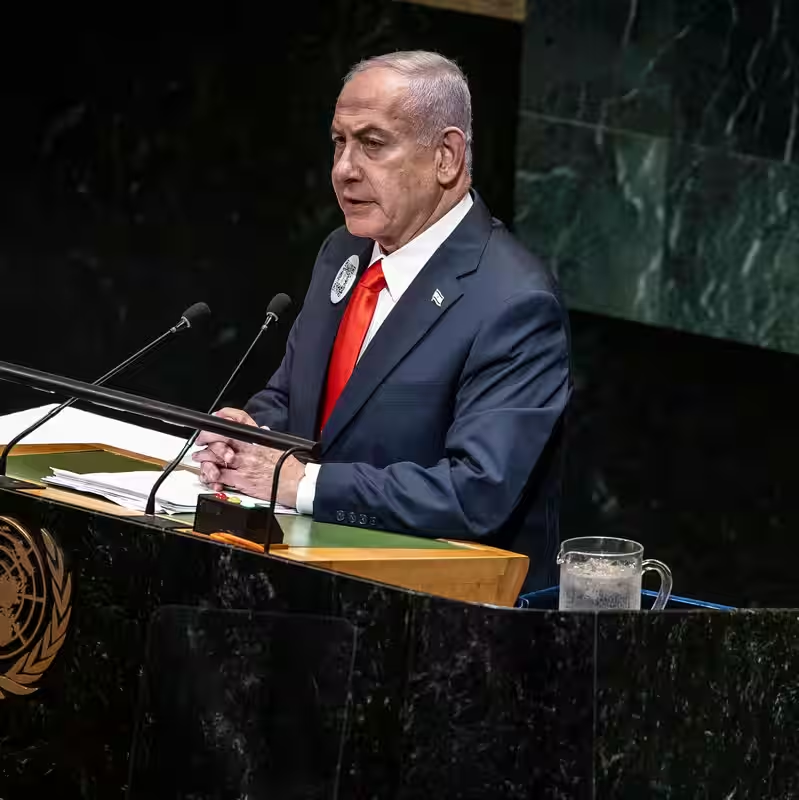
For months, Israeli Prime Minister Benjamin Netanyahu seemed politically cornered. His approval ratings had plummeted, his coalition was fracturing, and public fury over the October 7th attacks and the prolonged war in Gaza was at a boiling point. But a breakthrough in hostage negotiations could be the dramatic turn that reshapes his entire political future.
From Political Pariah to Power Player?
Just weeks ago, Netanyahu was widely seen as a leader on his last legs, with many analysts predicting his imminent downfall. However, the emergence of a concrete Gaza hostage deal has injected a new, potent energy into his premiership. This isn’t just about saving lives; it’s about saving his political career.
Early Thursday morning, Netanyahu made a powerful vow: “We will bring all hostages home” . This statement, coupled with a tangible agreement, has given him a powerful narrative of a leader who delivers results, even in the face of overwhelming odds. The deal provides him with a much-needed win that he can leverage both domestically and internationally.
Netanyahu’s Strategic Calculus
The Prime Minister’s position has been a complex web of military objectives, coalition politics, and international pressure. His hardline stance that “Hamas’ rule has to come to an end” and that the group “cannot come back to running Gaza” has been a cornerstone of his policy .
However, this new deal appears to offer a path forward that doesn’t require a complete military victory—a goal that has proven elusive. By securing the release of hostages, Netanyahu can claim a major humanitarian and strategic achievement without having to declare a full end to the war. This gives him critical “room for maneuver,” as analysts have noted, allowing him to manage his fragile coalition and respond to international demands with a newfound flexibility.
The Deal’s Political Ripple Effects
The impact of this deal on Israel’s internal politics cannot be overstated. Here’s a quick look at the potential shifts:
| Political Factor | Before the Deal | After the Deal |
|---|---|---|
| Public Approval | Historically low, with massive protests | Potential for a significant boost |
| Coalition Stability | Fragile, with far-right partners threatening to quit | Temporarily strengthened by a shared victory |
| International Standing | Under intense pressure from the U.S. and allies | Improved, with a demonstration of diplomatic progress |
While some reports have suggested Netanyahu may have previously derailed potential deals for political reasons , this current agreement appears to be on a different footing. Its success could silence his critics and reframe the narrative from one of failure to one of resilience and ultimate success.
What’s Next for Israel?
The hostage deal is just the beginning of a new, complex chapter. The question now is whether Netanyahu can use this momentum to navigate the treacherous waters ahead. Can he manage the expectations of his far-right coalition partners who demand the total destruction of Hamas? Can he use this diplomatic opening to forge a more sustainable path for Gaza’s future that satisfies international partners?
For now, the Prime Minister has been granted a powerful reprieve. A Gaza deal that once seemed impossible has not only offered hope to the families of the captives but has also thrown a lifeline to a leader whose political fortunes were fading fast.
Sources
- The New York Times: Netanyahu’s Political Fortunes May Be Transformed by Gaza Deal
- Various international news reports on Netanyahu’s statements, October 2025.