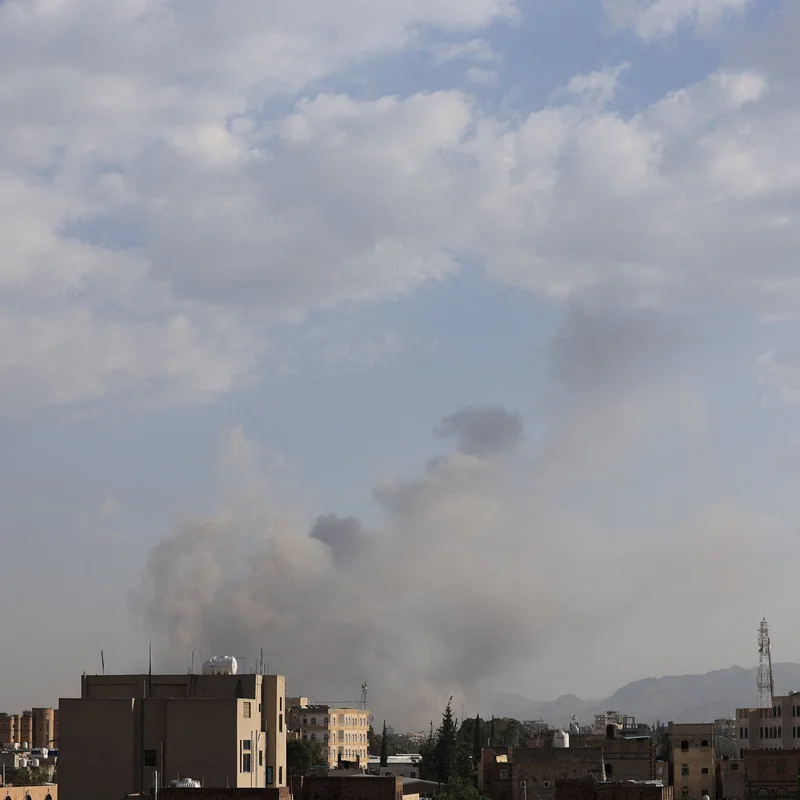
In a dramatic escalation of the shadow war between Israel and Iran-backed militias, the Israeli Air Force launched a **massive airstrike on Yemen’s capital, Sana**, on September 25, 2025—just one day after a **Houthi drone struck the Red Sea resort city of Eilat**, injuring 20 people .
According to the Israeli Defense Forces (IDF), the operation targeted **Houthi military infrastructure**, including intelligence facilities and weapons depots. However, eyewitnesses and local health officials report that at least one **residential building in a densely populated neighborhood** was destroyed, killing eight and injuring 142 .
Why This Escalation Matters
This marks the **deepest Israeli strike inside Yemen since the Gaza war began in October 2023** and signals a strategic shift: with Hezbollah weakened in Lebanon and Hamas contained in Gaza, Israel is now directly confronting the Houthis—a key Iranian proxy that has disrupted global shipping and launched cross-continental drone attacks .
Timeline of Recent Israel–Houthi Escalation
- Sept. 24: Houthi drone evades Israeli air defenses and hits Eilat—20 injured.
- Sept. 25 (early morning): Dozens of Israeli fighter jets strike multiple sites in Sana.
- Sept. 25 (evening): Yemeni health ministry reports 8 dead, 142 wounded; residential building confirmed hit.
- Ongoing: U.S. monitors situation closely; no public comment yet on Israeli operation.
Civilian Impact and Contested Targets
While Israel claims all targets were military, local sources tell a different story. Hamid al-Wusabi, a witness in Sana’s al-Raqas district, described the moment a **three-story residential building collapsed**:
“When I came out, the rubble of the building filled the place and ambulances were rushing in.”
The Houthis also allege Israel struck a **detention facility** holding political prisoners—a claim the IDF neither confirmed nor denied, but stated it targeted “security and intelligence apparatuses involved in suppressing regime opponents” .
Broader Regional Context
The Houthis began attacking Israel and Red Sea shipping in **October 2023**, declaring solidarity with Palestinians in Gaza. Since then, they’ve launched over **150 drones and missiles** toward Israel, most intercepted—but the Eilat strike shows growing sophistication .
| Actor | Role in Conflict | U.S. Stance |
|---|---|---|
| Israel | Conducting retaliatory airstrikes on Houthi targets | Supports right to self-defense; coordinates intelligence |
| Houthis (Ansar Allah) | Iran-backed militia controlling northern Yemen | Designated terrorist group; U.S. has bombed Houthi sites since 2024 |
| Iran | Provides drones, missiles, and training to Houthis | Sanctioned; seen as orchestrating “axis of resistance” |
Why North Americans Should Pay Attention
- 🚢 Global trade at risk: Houthi attacks have disrupted Red Sea shipping lanes, raising costs for U.S. and Canadian imports.
- 🛡️ U.S. military involvement: American forces have conducted dozens of strikes on Houthi radar and missile sites since 2024.
- 🌐 Proxy war expansion: The Israel–Houthi conflict is part of a wider Iran–Israel cold war with potential to ignite wider regional conflict.
What Comes Next?
Analysts warn of a **cycle of retaliation**: the Houthis have vowed to “respond with greater force,” while Israel has signaled it will no longer tolerate drone incursions. With Yemen’s humanitarian crisis already among the world’s worst—21 million people in need of aid—further strikes could deepen civilian suffering .
For more on Middle East proxy conflicts, see our deep dive at [INTERNAL_LINK:Israel Iran proxy wars].
For verified data on global conflict zones, visit the International Crisis Group – Yemen, a leading authority on conflict analysis.