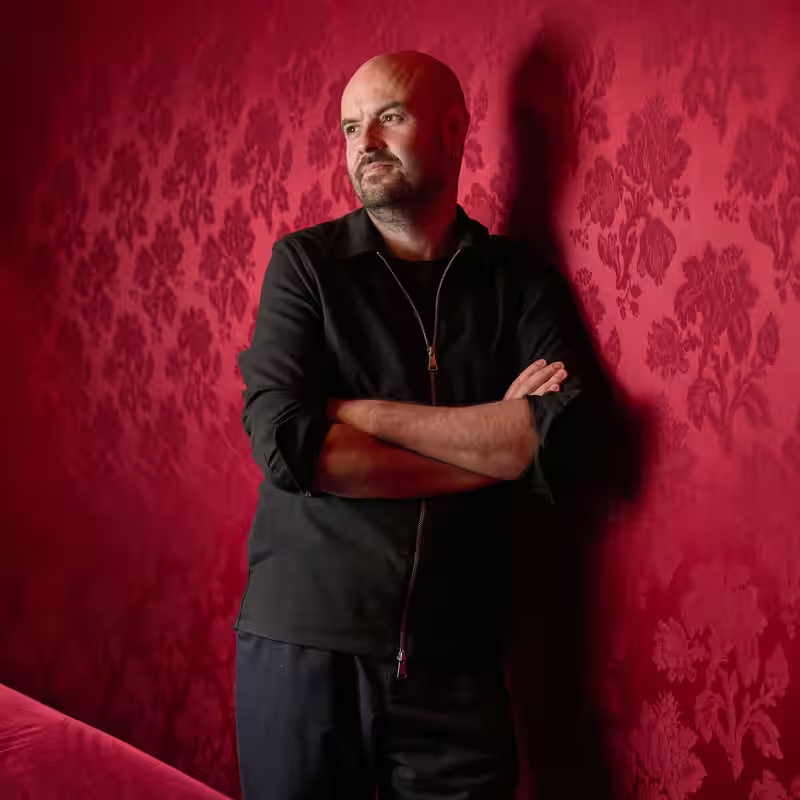
In an era of shrinking arts funding and shortened attention spans, Julien Gosselin is betting big—on time, scale, and vision. As the newly appointed director of Paris’s prestigious Odéon-Théâtre de l’Europe, Gosselin is launching a 10-hour theatrical epic that challenges audiences to sit, reflect, and experience storytelling in its most immersive form.

A Grand Vision Amid Fiscal Reality
Despite France’s Ministry of Culture imposing significant budget constraints on national theaters, Gosselin refuses to scale back. His inaugural season at Odéon includes not only the marathon 10-hour production—an adaptation of a sprawling 20th-century novel—but also multilingual performances, experimental staging, and collaborations with refugee artists from across Europe.
Why 10 Hours? The Art of Duration
“Theater isn’t just entertainment—it’s a shared ritual,” Gosselin told The New York Times. “Ten hours lets us build a world the audience can truly live in.” Known for his bold adaptations of literary giants like Proust and Houellebecq, Gosselin uses extended runtimes to explore psychological depth, political nuance, and collective memory in ways traditional theater cannot.
Infographic: Odéon Under Gosselin – By the Numbers
| Metric | Detail |
|---|---|
| Longest Production | 10 hours (single-day performance with meal breaks) |
| Budget Cut (2025) | 12% reduction from Ministry of Culture |
| Languages Featured | French, Arabic, Ukrainian, English, Wolof |
| Collaborating Artists | 42 performers from 15 countries |
Defying the Trend
While many European theaters pivot toward shorter, digital, or commercially safe programming, Gosselin’s approach is a defiant act of artistic resistance. “If we only give people what algorithms say they want, we lose what theater is for,” he said.
- First 10-hour show opens: November 14, 2025
- Seating capacity: 850 (sold out for opening week)
- Intermissions: 3, including a communal dinner on stage
- Funding workaround: Private patrons + EU cultural grants
For theatergoers willing to surrender a full day—and for a cultural institution refusing to shrink its ambition—Gosselin’s Odéon may just be redefining what public theater can be in the 21st century.