Table of Contents
- The Birth of ‘Mexico Sings’: A Government’s Musical Mission
- Meet the Winners: Love, Hope, and Mariachi-Hip-Hop
- The Rise—and Grip—of Narco Ballads in Mexican Culture
- Can Music Really Change a Nation’s Narrative?
- Public and Artist Reactions: Skepticism Meets Optimism
- Sources
The Birth of ‘Mexico Sings’: A Government’s Musical Mission
In a bold cultural experiment, the Mexican government launched its first-ever national music competition, Mexico Sings, aimed squarely at reshaping the country’s sonic identity. The goal? To replace violent, cartel-glorifying lyrics with songs about love, hope, and national pride.
Held over several weeks and culminating in a grand finale on Sunday, October 6, 2025, the contest drew more than 15,000 participants from every corner of Mexico. Unlike reality shows like “The Voice” or “American Idol,” this wasn’t driven by TV ratings—but by public policy.
Meet the Winners: Love, Hope, and Mariachi-Hip-Hop
Three artists took home top honors in the inaugural Mexico Sings competition:
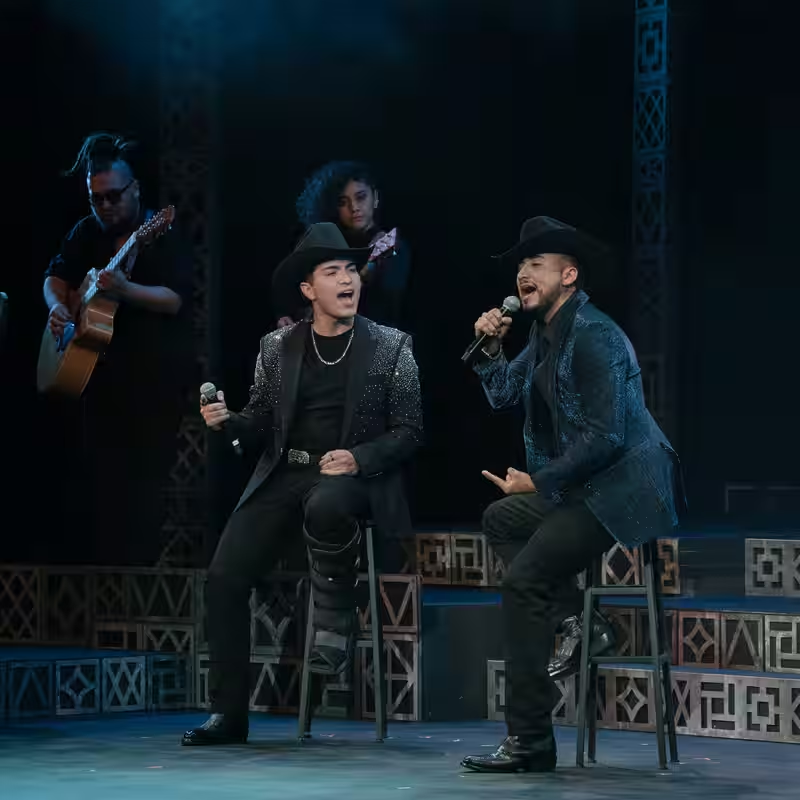
- Sergio Maya, 21 – Crowned “Best Performer” for his genre-blending track that fused traditional mariachi with modern hip-hop beats.
- Ana Lucía Ríos – Won for her heartfelt ballad about a missed romantic connection, praised for its emotional authenticity.
- Javier Morales – Captivated voters with a sweeping patriotic anthem celebrating Mexico’s landscapes, people, and resilience.
At the post-show press conference, Maya declared: “Here begins the new generation of Mexican artists who show that Mexico does not need to promote crime and violence, but that with love we can sing for hope and for the Mexico we all want to build.”
The Rise—and Grip—of Narco Ballads in Mexican Culture
To understand the significance of Mexico Sings, one must reckon with the dominance of narcocorridos—a subgenre of traditional corridos that glorify drug lords, cartel violence, and outlaw lifestyles.
While corridos have existed since the 19th century as folk narratives of revolution and heroism, narcocorridos exploded in popularity in the 1990s and 2000s. Today, they dominate streaming platforms, radio playlists, and even international charts.
Critics argue these songs normalize brutality and romanticize criminality—especially among youth. But fans counter that they reflect harsh realities and serve as social commentary.
Can Music Really Change a Nation’s Narrative?
The Mexico Sings initiative is more than entertainment—it’s soft-power policy. Backed by federal cultural agencies, the program seeks to:
- Promote positive storytelling through music
- Provide alternative platforms for young artists
- Counter the cultural influence of organized crime
“Music shapes identity,” said Dr. Elena Vargas, a cultural sociologist at UNAM. “If the soundtrack of a generation is built on violence, it becomes harder to imagine peace. This contest is an attempt to rewrite that soundtrack.”
Public and Artist Reactions: Skepticism Meets Optimism
Reactions to Mexico Sings have been mixed. On social media, some praised the government for investing in art over arms. Others mocked the effort as naive: “You can’t cancel cartels with a love song,” read one viral tweet.
Yet many emerging musicians welcomed the platform. “For years, if you didn’t sing about guns or money, no one would play your music,” said indie singer Marisol Fuentes. “Now there’s space for us.”
Whether this initiative sparks a lasting shift remains to be seen—but for one night in October, Mexico chose harmony over horror.
Sources
Can Sweet Songs Prevail Over Bloody Ones? Mexico Is Giving It a Try – The New York Times