World Cup Dreams vs. Public Needs: Deadly Unrest in Morocco
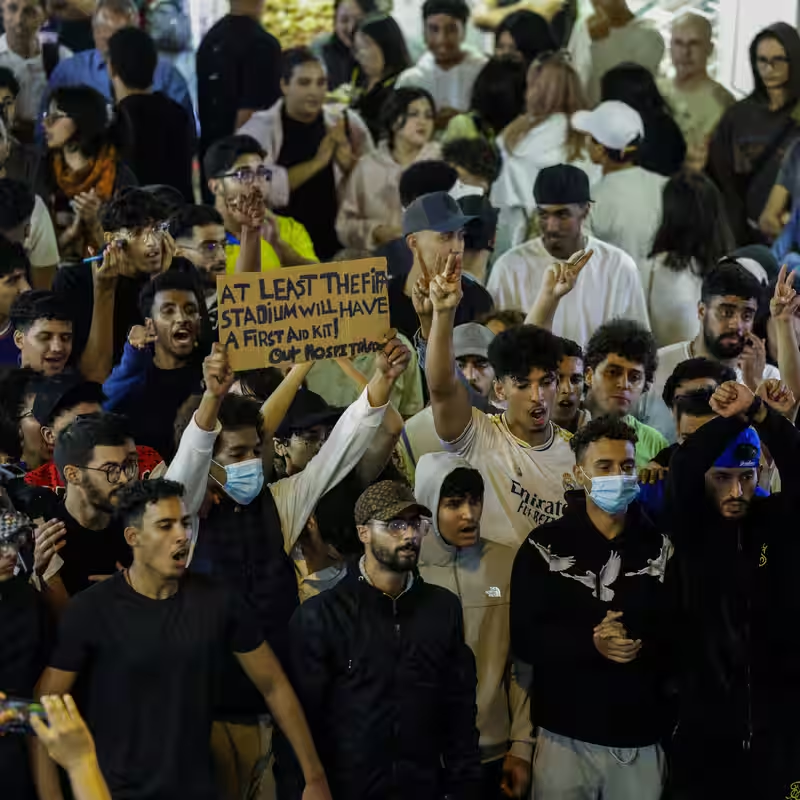
Three people were killed and dozens injured as anti-government protests led primarily by Gen Z Moroccans erupted across cities this week, fueled by outrage over the state’s massive spending on the 2030 FIFA World Cup while basic public services crumble .
The demonstrations—some of the largest in years—saw thousands take to the streets in Casablanca, Rabat, and Tangier, waving signs reading “Hospitals, Not Stadiums” and “Feed Us, Don’t Entertain Us.” Authorities responded with water cannons and tear gas, escalating tensions in a nation long seen as stable in North Africa .
Why Are Young Moroccans Angry?
At the heart of the unrest is a growing generational divide. While the government touts Morocco’s co-hosting of the 2030 World Cup (with Spain and Portugal) as a source of national pride, youth face soaring unemployment (over 25% for ages 15–24), underfunded schools, and frequent power and water shortages .
- World Cup Budget: Estimated $8+ billion allocated for stadiums, transport, and security.
- Healthcare Spending: Only 5.6% of GDP—below WHO recommendations.
- Youth Unemployment: 25.3% in Q2 2025 (High Commission for Planning, Morocco).
- Protest Demographics: 78% of demonstrators aged 18–30, per local NGO estimates.
Protest Timeline & Casualties
| Date | City | Event | Casualties |
|---|---|---|---|
| Oct 1, 2025 | Casablanca | March on Ministry of Youth & Sports | 1 killed, 12 injured |
| Oct 2, 2025 | Rabat | Clashes near Parliament | 2 killed, 24 arrested |
| Oct 2, 2025 | Tangier | Peaceful rally turned violent | 0 killed, 8 injured |

Government Response
Prime Minister Aziz Akhannouch condemned the “exploitation of legitimate concerns by agitators,” while pledging to “review budget priorities.” However, he reaffirmed Morocco’s commitment to hosting the World Cup, calling it a “once-in-a-generation opportunity” .
Human rights groups, including Amnesty International, have called for an independent investigation into the use of lethal force against demonstrators.
Global Implications
The protests highlight a growing trend in Global South nations: the tension between mega-sporting event investments and urgent social needs. Similar debates have emerged in Brazil (2014), Qatar (2022), and now Morocco ahead of 2030 .
[INTERNAL_LINK:Morocco Politics] | [INTERNAL_LINK:FIFA World Cup 2030]