Trump Launches China Trade Deal Investigation Ahead of Xi Summit
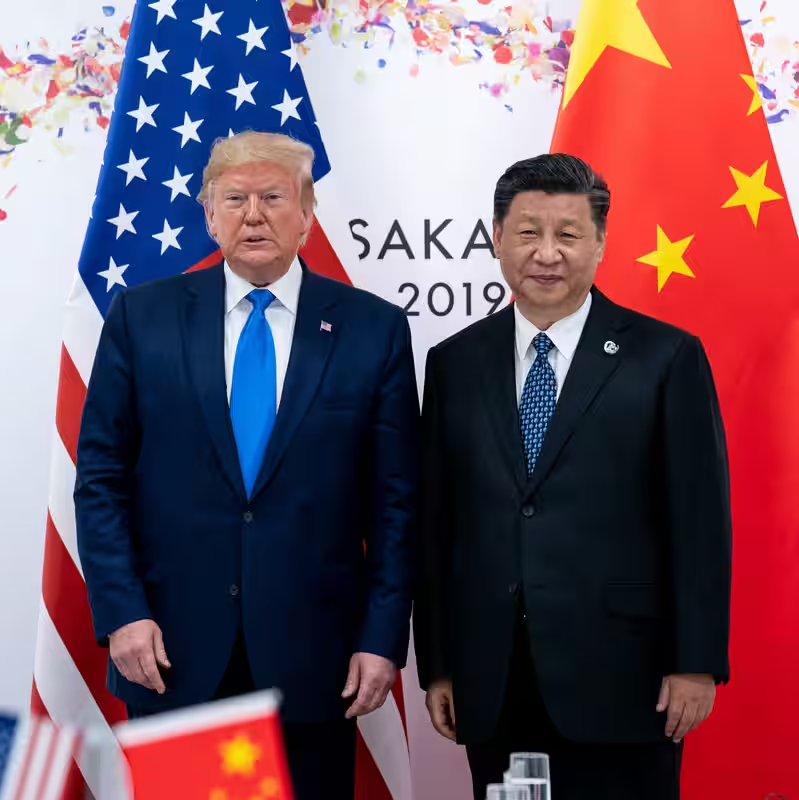
In a bold move that could reshape U.S.-China economic relations, former President Donald Trump’s administration has launched a formal investigation into whether China honored the terms of the landmark 2020 trade agreement. The probe, announced Friday by the Office of the U.S. Trade Representative (USTR), comes just days before Trump is set to meet Chinese President Xi Jinping on the sidelines of a major summit in South Korea.
Why the China Trade Deal Is Under Scrutiny
The 2020 Phase One trade deal—brokered during Trump’s first term—was hailed as a breakthrough aimed at reducing the massive U.S. trade deficit with China and curbing Beijing’s intellectual property theft. In exchange for rolling back some tariffs, China pledged to purchase an additional $200 billion worth of American goods over two years.
However, multiple independent analyses, including from the Peterson Institute for International Economics, show China fell short by nearly 40%. Now, the Trump administration alleges that Beijing not only failed to meet its purchasing commitments but also continued state-backed subsidies and export restrictions that undermine U.S. industries.
Timing Isn’t Coincidental
The investigation’s timing is widely seen as strategic. With Trump campaigning for a potential 2028 presidential run, the move reinforces his “America First” brand while pressuring Xi ahead of their high-stakes meeting in Seoul.
“This isn’t just about compliance—it’s about leverage,” said Dr. Elena Ramirez, a trade policy fellow at the Brookings Institution. “Trump is signaling that the era of leniency is over.”
Possible Outcomes of the Investigation
Under Section 301 of the Trade Act of 1974, the USTR has 90 days to determine if China violated the agreement. If violations are confirmed, the U.S. could:
- Reimpose or escalate tariffs on Chinese imports
- Target specific sectors like electric vehicles, semiconductors, or rare earth minerals
- File a formal complaint with the World Trade Organization (WTO)
Notably, Trump has already threatened to slap a 100% tariff on all Chinese goods starting November 1 if “immediate concessions” aren’t made—a move that would dwarf the trade war of 2018–2020.
China’s Response and Regional Fallout
Beijing has dismissed the investigation as “politically motivated” and accused the U.S. of “trade bullying.” Chinese officials are currently in Malaysia for pre-summit talks with U.S. counterparts, aiming to de-escalate tensions.
Yet the stakes are high. China recently imposed sweeping export controls on critical minerals like gallium and germanium—key components in U.S. defense and tech manufacturing. Analysts warn that tit-for-tat retaliation could disrupt global supply chains just as the world economy shows signs of fragility.
What the 2020 Deal Actually Promised
| Commitment Area | China’s Pledge | Actual Fulfillment (2020–2022) |
|---|---|---|
| Agricultural Goods | $32 billion/year | ~65% met |
| Energy Products | $52 billion/year | ~50% met |
| Manufactured Goods | $77 billion/year | ~40% met |
| Services | Market access reforms | Limited progress |
Source: Peterson Institute for International Economics, 2023 Review
Domestic and Global Implications
U.S. farmers and manufacturers—who were promised a windfall from the deal—are watching closely. Many supported Trump in 2024 and expect accountability.
Globally, allies like the EU and Japan are bracing for ripple effects. A renewed U.S.-China trade war could force countries to choose sides, fragmenting the global trading system further.
Sources
The New York Times: Trump to Investigate Whether China Abided by 2020 Trade Deal
Peterson Institute for International Economics – China Trade Tracker