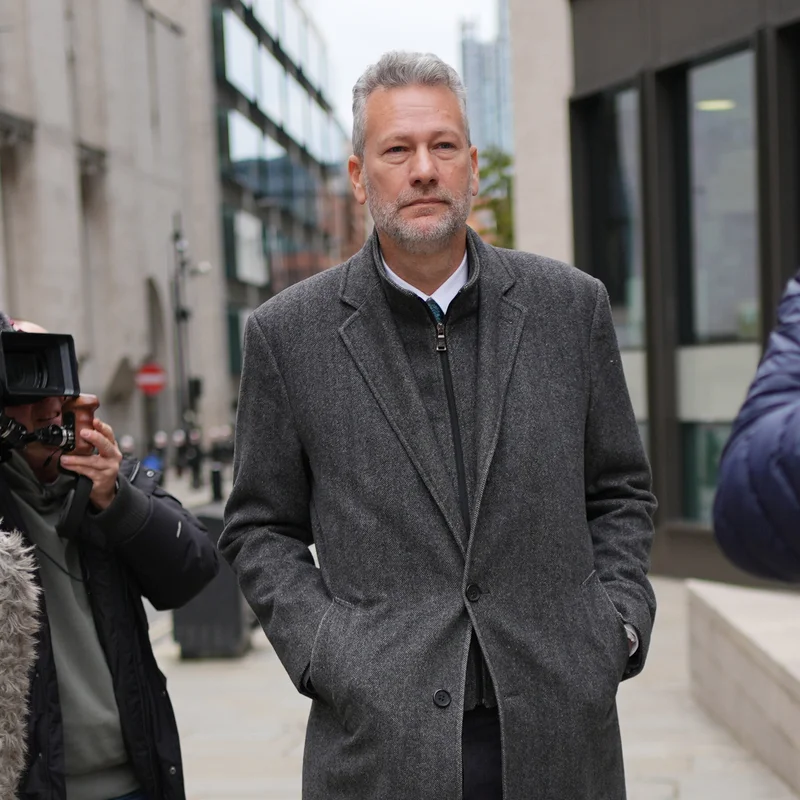
In a stunning admission that underscores the reach of Russian influence operations in Europe, former British politician Nathan Gill pleaded guilty on September 26, 2025, to accepting bribes in exchange for delivering pro-Russia statements while serving in the European Parliament. The case—part of a widening crackdown on Kremlin-linked subversion—reveals how foreign actors exploited democratic institutions to advance Moscow’s geopolitical agenda.
Who Is Nathan Gill?
Nathan Gill, 52, represented Wales in the European Parliament from 2014 to 2020. Initially a member of the right-wing U.K. Independence Party (UKIP), he later joined Nigel Farage’s Brexit Party—now known as Reform U.K.—which currently leads British opinion polls [[NYT]]. Though no longer in office, Gill’s actions during his tenure have triggered national security concerns.
How the Scheme Worked: A Step-by-Step Breakdown
According to British prosecutors, Gill acted on instructions from Oleg Voloshyn—a Ukrainian national with deep Kremlin ties—via WhatsApp messages. In return for payments, Gill carried out a series of coordinated actions to promote Russian interests:
- Delivered scripted speeches in the European Parliament attacking Ukraine’s media laws and defending pro-Russian outlets.
- Appeared on 112 Ukraine, a now-banned pro-Kremlin TV channel, to claim Viktor Medvedchuk was being “persecuted” for his political views.
- Recruited other MEPs to echo pro-Medvedchuk messaging on international platforms.
- Hosted a European Parliament event in July 2019 promoting Medvedchuk’s “Peace Plan for Donbass”—a proposal widely seen as legitimizing Russian control over eastern Ukraine.
Just one day after that event, Medvedchuk met with Vladimir Putin in Moscow, calling the parliamentary session a “success.” Putin reportedly praised it as “very positive” [[NYT]].
The Kremlin’s Proxy: Oleg Voloshyn
Voloshyn, a former official in the Russia-backed Yanukovych regime, was sanctioned by both the U.S. and U.K. in 2022 for “spreading disinformation and pro-Russian narratives” [[NYT]]. British authorities say he used Gill as a paid asset to influence European policy and undermine Ukraine’s sovereignty.
| Date | Action by Gill | Pro-Kremlin Objective |
|---|---|---|
| Dec 2018 | Speech defending pro-Russian media | Undermine Ukraine’s information sovereignty |
| Feb 2019 | TV appearance supporting Medvedchuk | Portray him as a political victim |
| July 2019 | Hosted Medvedchuk in European Parliament | Legitimize Russian-backed “peace” plan |
Broader Implications for Western Democracies
Gill’s case is not isolated. It’s part of a growing pattern of Russian influence operations targeting Western institutions:
- ✅ A spy ring in the U.K. targeted journalists and Kremlin critics
- ✅ A pro-Russia gang set fire to a Ukrainian-owned warehouse in London
- ✅ Multiple European politicians have faced investigations for undeclared Russian ties
“He was taking payments to peddle narratives that would have had the effect of being beneficial toward Russian interests.”
— Dominic Murphy, Head of Metropolitan Police National Security Unit [[NYT]]
Why This Matters to North American Readers
While this case unfolded in Europe, it serves as a stark warning for the U.S. and Canada. With elections approaching in both countries, intelligence agencies have repeatedly warned that foreign actors—including Russia—are using paid influencers, fake think tanks, and compromised officials to sway public opinion.
U.K. Case
Paid MEP for pro-Russia messaging
FBI Alert
Russian ops targeting 2026 U.S. elections
Defense
Strengthen foreign agent laws
For more on transatlantic security threats, see our investigation on [INTERNAL_LINK:russian-influence-western-democracies].
For official U.S. guidance on foreign interference, visit the Office of the Director of National Intelligence.