Table of Contents
- Walmart Buys a Mall—Why?
- What We Know About Monroeville Mall
- The Rise and Fall of American Malls
- Walmart’s Bigger Play: Mixed-Use Development
- What This Means for Local Businesses
- Sources
Walmart Buys a Mall—Why?
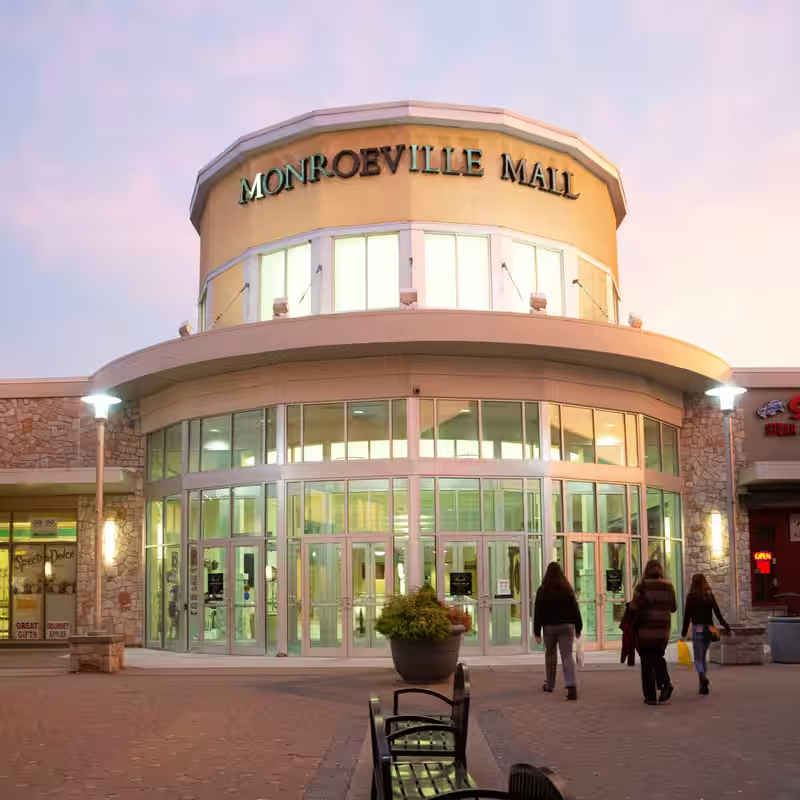
In a move that’s left retail analysts and local residents scratching their heads, Walmart recently purchased the Monroeville Mall in suburban Pittsburgh, Pennsylvania. The company hasn’t released an official plan—but behind the scenes, the story is already unfolding.
According to conversations between mall tenants and Walmart’s development partner, the iconic 1960s-era shopping center won’t be getting a facelift. Instead, it’s slated for full demolition to make way for a modern mixed-use development. Think apartments, offices, green spaces—and yes, a new Walmart.
What We Know About Monroeville Mall
Opened in 1969, Monroeville Mall was once a retail powerhouse and even gained pop-culture fame as the filming location for George A. Romero’s 1978 horror classic Dawn of the Dead. At its peak, it housed over 200 stores, including anchors like Macy’s, JCPenney, and Sears.
But like hundreds of malls across America, Monroeville has struggled with declining foot traffic, store closures, and aging infrastructure. Macy’s shuttered in 2023. JCPenney followed in 2024. By the time Walmart acquired the property in late 2025, fewer than 30 tenants remained.
The Rise and Fall of American Malls
Malls were once symbols of postwar prosperity and suburban life. But e-commerce, shifting consumer habits, and the pandemic accelerated their decline. According to the International Council of Shopping Centers, over 25% of U.S. malls are now considered “distressed” or “dying.”
Yet rather than abandon these spaces, major corporations like Walmart, Amazon, and Target are reimagining them—not as retail cathedrals, but as integrated community hubs.
Mixed-use development: Walmart’s Urban Strategy
Walmart’s interest in mixed-use development isn’t new—but it’s gaining momentum. In recent years, the retailer has quietly partnered with real estate firms to redevelop underperforming properties into live-work-play environments.
The Monroeville project appears to follow this playbook. Preliminary talks with tenants suggest the new plan includes:
- A smaller-format Walmart Supercenter (likely 100,000 sq ft vs. the old 200,000+)
- 400–600 residential units, including affordable housing
- Medical offices and co-working spaces
- Pedestrian plazas, bike lanes, and public art
This shift aligns with Walmart’s broader strategy to move beyond “big box” retail and embed itself in daily urban life—competing not just with Target, but with Amazon’s logistics and housing ambitions.
Why Mixed-Use Makes Sense for Walmart
| Traditional Mall | Mixed-Use Redevelopment |
|---|---|
| Declining foot traffic | Steady residential population = consistent customers |
| High maintenance costs | Modern, energy-efficient buildings = lower OPEX |
| Single-use zoning | Diversified revenue (rent, retail, services) |
| Car-dependent design | Walkable, transit-friendly layout |
What This Means for Local Businesses
For current mall tenants, the news is bittersweet. While some were offered relocation assistance, others fear displacement without a safety net. “We’ve been here 22 years,” said Maria Chen, owner of Monroeville Jewelers. “They’re talking about ‘community,’ but where’s our place in it?”
Still, local officials see potential. Monroeville Mayor Greg Wolfe called the project “a generational opportunity” to revitalize a blighted corridor and increase tax revenue. If Walmart includes local vendors in its new retail mix—and prioritizes union labor in construction—the project could win broader support.
One thing is clear: the era of the enclosed suburban mall is ending. And Walmart, once seen as its destroyer, may now be one of its most unlikely redevelopers.