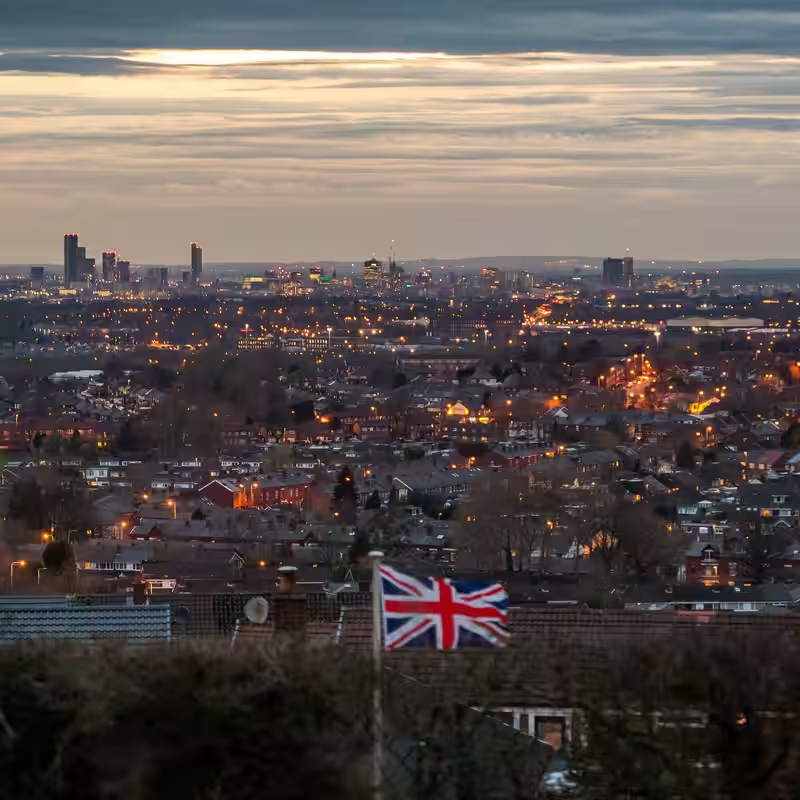
Manchester: A Living Tapestry of Faith, History, and Coexistence
Manchester isn’t just a hub of industry and innovation—it’s also home to one of the UK’s most remarkable social experiments in multicultural harmony. With around 30,000 Jewish residents, it hosts the largest Jewish community outside London. Yet just blocks away, over 110,000 Muslims—nearly one-fifth of the city’s 550,000 population—live, work, and worship in peaceful coexistence .

A Legacy of Sanctuary and Solidarity
Jewish families first arrived in Manchester in the 18th century, but the community truly flourished in the late 1800s as refugees fled pogroms in Eastern Europe. The city’s booming textile trade offered opportunity—and safety. Waves of migration continued through the 20th century, especially during the rise of Nazism in the 1930s .
Today, that legacy of refuge extends far beyond one group. Manchester is a vibrant mosaic of South Asian, African, Caribbean, Eastern European, and Middle Eastern communities—all contributing to its dynamic cultural identity.
By the Numbers: Manchester’s Diversity Snapshot
| Community | Estimated Population | Historical Arrival Period |
|---|---|---|
| Jewish | ~30,000 | 18th century onward; major influx 1880s–1930s |
| Muslim | ~110,000 (20% of city) | Post-WWII, especially 1950s–1980s |
| Total City Population | 550,000 | — |
Coexistence in Practice
- Local MP Graham Stringer describes Manchester as “a very large Jewish community next to a very large Muslim community” with excellent intergroup relations .
- Interfaith initiatives, shared community centers, and joint cultural festivals are common.
- Despite occasional tensions from extremist elements, the city maintains a strong civic ethos of tolerance.
“There are always extreme people who want to damage those relationships,” Stringer noted, “but the vast majority reject division.”
For more on global urban diversity, explore our [INTERNAL_LINK:World News] section.