Table of Contents
- Trump Halts Venezuela Diplomacy Overnight
- Why Trump Lost Patience with Maduro
- Richard Grenell’s Failed Backchannel
- Signs Point to Imminent Military Escalation
- Regime Change or Drug War? The Strategy Divide
- Sources
Trump Halts Venezuela Diplomacy Overnight
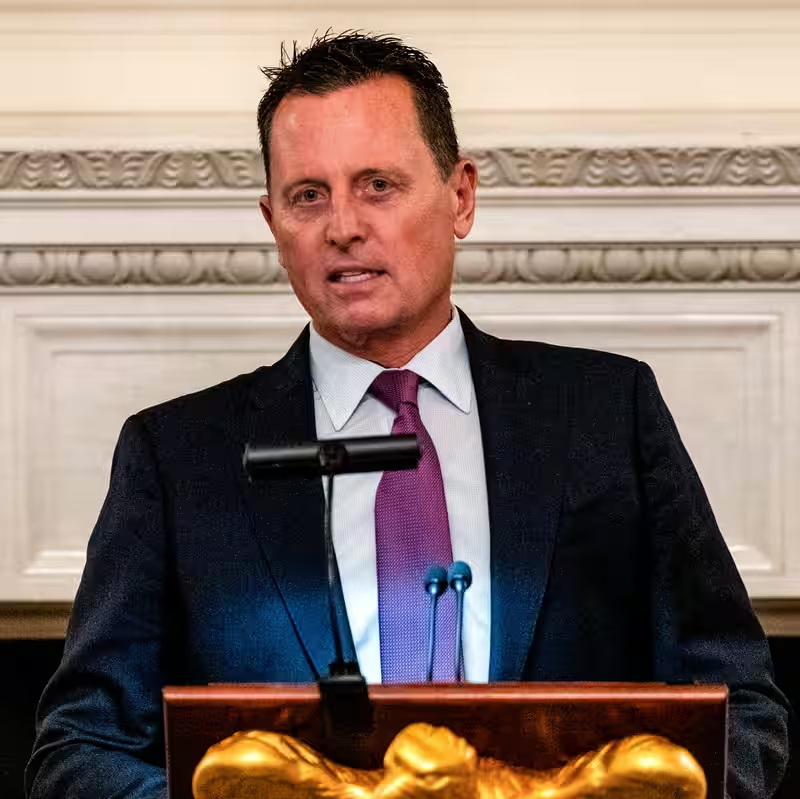
In a dramatic shift of U.S. foreign policy, President Donald Trump has abruptly terminated all diplomatic outreach to Venezuela, according to senior U.S. officials. The move, confirmed Monday, effectively ends months of quiet negotiations led by special envoy Richard Grenell and opens the door to potential military action against either drug cartels operating in the region—or the government of Nicolás Maduro itself.
The decision came during a Thursday meeting with top military leaders, when Trump personally called Grenell and ordered an immediate halt to all talks. “No more diplomacy,” the president reportedly said.
Why Trump Lost Patience with Maduro
The Trump-Venezuela rift stems from two core frustrations:
- Maduro’s refusal to step down despite mounting U.S. pressure
- Venezuela’s continued denial of involvement in international drug trafficking
Despite a recent letter from Maduro to Trump denying narcotics ties and offering renewed dialogue through Grenell, the White House deemed the overtures insincere. “He’s a fugitive from American justice,” said Secretary of State Marco Rubio, who has long pushed for a hardline approach.
The U.S. has placed a $50 million bounty on Maduro’s head, citing a federal indictment that accuses him of directing drug cartels—a charge Caracas vehemently denies.
Richard Grenell’s Failed Backchannel
Richard Grenell, best known as the Kennedy Center’s executive director and a former acting director of national intelligence, had been quietly negotiating with Venezuelan officials for months. His goal: secure the release of detained Americans and gain U.S. access to Venezuela’s vast oil reserves—all while avoiding open conflict.
But within the Trump administration, Grenell’s efforts faced fierce opposition. Rubio and his allies argued the talks created “confusion” and undermined the administration’s tough stance. “Diplomacy was being used as a fig leaf while drugs kept flowing,” said one official briefed on internal debates.
Signs Point to Imminent Military Escalation
The end of diplomacy coincides with a sharp uptick in U.S. military activity near Venezuela:
- Four U.S. naval strikes on suspected drug boats in international waters
- A formal congressional notice declaring the U.S. in “armed conflict” with drug cartels
- Cartel members now classified as “unlawful combatants” under U.S. policy
Defense Secretary Pete Hegseth confirmed the latest strike killed four individuals aboard a vessel near Venezuela’s coast. Analysts warn this could be a prelude to operations inside Venezuelan territory.
Regime Change or Drug War? The Strategy Divide
While the White House insists its focus is stopping narcotics, many observers see a dual agenda: removing Maduro. “Every element of American power” is on the table, a senior official said.
Yet this path is fraught with risk. Critics—including some within Trump’s own circle—warn that direct military intervention could spark a protracted conflict, contradicting Trump’s long-standing pledge to avoid “endless wars.”
“You don’t invade Venezuela without consequences,” said a former Pentagon advisor. “This isn’t Panama 1989.”
For now, all eyes are on what Trump authorizes next. With diplomacy off the table, the only remaining language may be the one spoken by missiles and warships.
Sources
Trump Calls Off Diplomatic Outreach to Venezuela – The New York Times