Table of Contents
- The Supreme Court’s Landmark Ruling on Transgender Care
- Inside the Skrmetti v. United States Decision
- What Major Health Organizations Say About Gender-Affirming Care
- Where Transgender Care for Minors Is Now Banned
- Broader Implications for LGBTQ+ Rights and Judicial Trends
- Sources
Supreme Court Upholds Ban on Transgender Care for Minors
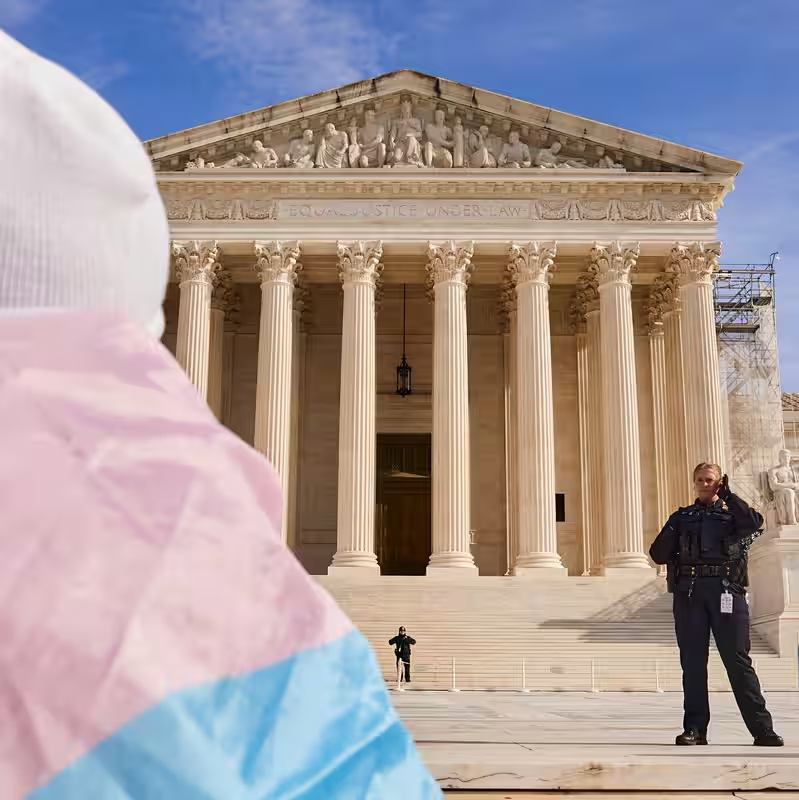
In a pivotal decision during its last term, the U.S. Supreme Court upheld a Tennessee law that bans certain forms of transgender care for minors, effectively validating similar restrictions in over 20 other states. The 6-3 ruling in United States v. Skrmetti marks a major turning point in the legal and medical landscape for transgender youth across America.
Chief Justice John G. Roberts Jr., writing for the majority, emphasized that “fierce scientific and policy debates” around gender-affirming treatments should be resolved not by courts, but by “the people, their elected representatives, and the democratic process.” This stance has opened the door for states to continue enacting or enforcing bans without immediate fear of federal judicial intervention.
Inside the Skrmetti v. United States Decision
The case centered on Tennessee’s 2023 law prohibiting medical professionals from providing puberty blockers, hormone therapy, and surgical interventions to individuals under 18 for the purpose of gender transition. Plaintiffs argued the ban violated equal protection and due process rights, but the Court ultimately sided with the state’s authority to regulate medical care for minors.
Notably, the ruling did not declare gender-affirming care unconstitutional nationwide. Instead, it affirmed that states have the power to restrict such treatments based on their own legislative findings—particularly when those findings cite concerns about long-term safety and efficacy.
What Major Health Organizations Say About Gender-Affirming Care
Despite the Court’s deference to state legislatures, every major U.S. medical association—including the American Academy of Pediatrics, the American Medical Association, and the American Psychological Association—supports access to gender-affirming care for adolescents under strict clinical guidelines.
These organizations stress that such care is not only safe but life-saving, citing studies showing significant reductions in depression, anxiety, and suicide risk among transgender youth who receive appropriate support.
Where Transgender Care for Minors Is Now Banned
Following the Supreme Court’s decision, at least 24 states have active laws restricting or banning gender-affirming medical care for minors. The map continues to shift, but as of October 2025, the following states enforce full or partial bans:
| Region | States with Active Bans |
|---|---|
| South | Tennessee, Texas, Florida, Alabama, Arkansas, Louisiana, Mississippi, Oklahoma, South Carolina |
| Midwest | Ohio, Indiana, Iowa, Kansas, Kentucky, Missouri, Nebraska, North Dakota, South Dakota |
| West | Montana, Utah, Idaho, Wyoming |
Conversely, states like California, New York, Illinois, and Colorado have passed laws explicitly protecting access to such care and even offering legal safe havens for families fleeing restrictive states.
Broader Implications for LGBTQ+ Rights and Judicial Trends
The Skrmetti ruling is part of a broader pattern in which the Court’s conservative majority has deferred to state-level moral and religious viewpoints on social issues—similar to its recent decisions on religious expression and public accommodations.
Critics warn the decision could embolden further restrictions, including on mental health counseling, school policies, and participation in sports. Advocates, however, are shifting strategy: focusing on state ballot initiatives, federal legislation like the Equality Act, and cross-state legal support networks.
For families of transgender youth, the message is clear: geography now plays a decisive role in access to care—and in some cases, safety.