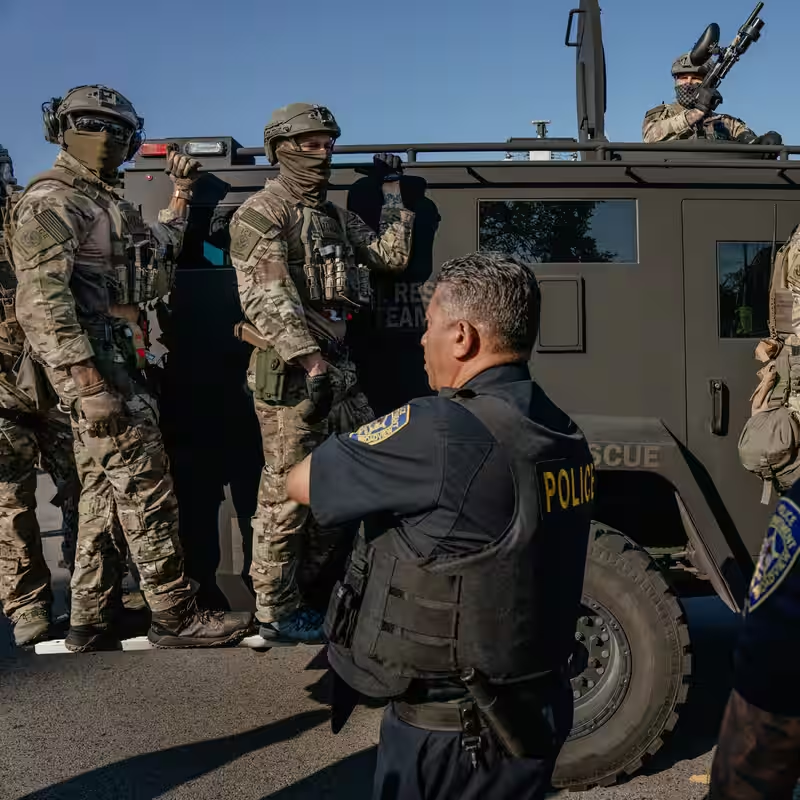
In a major victory for immigrant rights advocates, a federal judge has delivered a sharp rebuke to U.S. Immigration and Customs Enforcement (ICE), imposing strict new limits on the agency’s ability to conduct arrests without a warrant in the Chicago area. The ruling, handed down this week, finds that ICE repeatedly violated a court-enforced agreement designed to protect residents from unlawful detention.
What Happened? ICE Violated a Court Order
The story begins with a landmark 2022 consent decree—a legally binding agreement between ICE and a coalition of civil rights groups. This agreement was meant to curb ICE’s practice of making surprise arrests at courthouses, homes, and workplaces without a judicial warrant or clear probable cause. Its goal was simple: to ensure that constitutional rights are not trampled in the name of immigration enforcement.
However, U.S. District Judge Jeffrey Cummings has now found that ICE failed to uphold its end of the bargain. His recent ruling states that the agency conducted at least 22 warrantless arrests that directly contravened the terms of the 2022 settlement . This isn’t just a minor oversight; it’s a systemic breach of a federal court order.
The New Rules: What ICE Can (and Can’t) Do Now
As a consequence of this violation, Judge Cummings has extended and strengthened the original consent decree. The new limits are clear and direct:
- Warrant or Probable Cause Required: ICE agents must now have either a valid judicial warrant or a clear, documented case of probable cause before making an arrest within the Chicago Area of Responsibility.
- No More Courthouse Ambushes: The practice of waiting outside courthouses to arrest individuals attending legal proceedings is now under even tighter scrutiny and is effectively banned without the proper legal justification.
- Strict Oversight: The court will maintain active oversight to ensure ICE’s compliance, with the agency now required to provide detailed reports on its enforcement activities.
This ruling is a significant win for organizations like the National Immigrant Justice Center and the ACLU of Illinois, who have long argued that ICE’s tactics create a climate of fear, discouraging immigrants from accessing essential services or participating in the justice system .
Why This Matters for Chicago Residents
The implications of this decision extend far beyond the 22 specific cases. It sends a powerful message that even federal agencies are not above the law. For the hundreds of thousands of immigrants living in the greater Chicago area, this ruling offers a renewed sense of security. It means they can go to court for a traffic ticket, attend a school meeting, or seek medical help without the constant fear of being detained on the spot by immigration agents lacking proper legal authority.
“This is a big win for immigrant advocates in Chicago,” stated one legal expert following the case, highlighting the importance of the court’s firm stance against the agency’s overreach .
What’s Next for ICE?
The Department of Homeland Security, which oversees ICE, now faces a critical choice. It can either comply fully with the judge’s order and reform its local enforcement practices, or it can continue to challenge the ruling, potentially facing further legal penalties and a loss of public trust. The ball is firmly in their court.
Sources
- The New York Times: Federal Judge Imposes New Limits on Chicago ICE Arrests Without Warrants
- Chicago Tribune: Federal judge in Chicago finds ICE repeatedly violated consent decree over ‘warrantless arrests’
- National Immigrant Justice Center: Federal Judge Extends Consent Decree Prohibiting ICE From Arresting People Without Warrants or Probable Cause