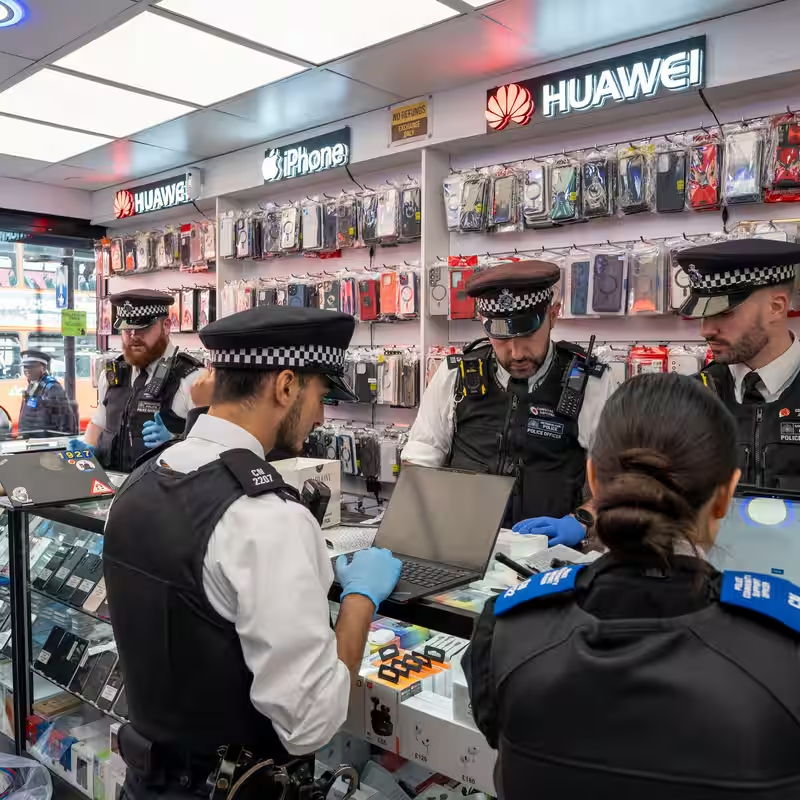
London has long been a vibrant global city—but in recent years, it’s gained a darker distinction: the phone theft capital of Europe. With nearly 80,000 mobile devices reported stolen in 2024 alone, residents and tourists alike have grown wary of pulling out their phones on the Tube or in busy shopping districts. Now, after months of covert operations and international collaboration, London police say they’ve cracked a major piece of the puzzle—and it leads straight to an organized gang with ties to China.
Table of Contents
- The Scale of the Crisis
- How the Theft Ring Operated
- The China Connection
- What Happens to Stolen Phones?
- How to Protect Your Device
The Scale of the Crisis
In 2024, the Metropolitan Police recorded approximately 80,000 phone thefts across London—an average of more than 200 devices stolen every single day. That’s a 35% increase from 2022, and experts believe the real number could be even higher due to unreported incidents. The problem has become so severe that Transport for London now runs public service announcements urging commuters to keep phones out of sight.
How the Theft Ring Operated
According to Scotland Yard, the operation wasn’t just opportunistic crime. Investigators uncovered a highly coordinated network using distraction tactics, pickpocket teams, and even staged collisions to snatch phones in seconds. Many of the perpetrators were part of a loosely organized but efficient crew that targeted high-footfall areas like Oxford Circus, King’s Cross, and Camden Market.
“These weren’t lone thieves,” said Detective Chief Inspector Maya Patel. “They worked in shifts, used encrypted messaging apps, and had designated ‘runners’ who would vanish into the crowd within seconds of a theft.”
The China Connection
The real breakthrough came when digital forensics traced batches of stolen iPhone and Samsung serial numbers to secondhand electronics markets in Shenzhen and Guangzhou. Authorities believe a transnational syndicate—comprising UK-based operatives and overseas buyers—was shipping thousands of devices abroad within 48 hours of theft.
Using fake documentation and repackaging, the phones were quickly wiped, reprogrammed, and sold as “refurbished” units across Asia and parts of Africa. Some were even funneled back into European gray markets. The entire supply chain, police say, was designed to erase digital fingerprints and avoid detection.
What Happens to Stolen Phones?
Once stolen, a phone’s journey is shockingly fast:
- Within minutes: SIM cards are removed; devices are powered off.
- Within hours: Phones are transported to “cleaning” hubs in East London or Birmingham.
- Within 24–48 hours: Devices are shipped via courier services using falsified commercial invoices.
- Within a week: They appear in online marketplaces overseas with new IMEI numbers.
How to Protect Your Device
While law enforcement ramps up efforts, experts urge the public to take proactive steps:
- Enable “Lost Mode” and remote wipe features (Find My iPhone / Find My Device).
- Avoid using your phone in crowded transport hubs.
- Use a nondescript phone case—flashy designs attract attention.
- Never leave your phone unattended, even for a second.
Police also recommend registering your device’s IMEI number with Immobilise, a national property register that helps recover stolen items.
Sources
- The New York Times: “London Became a Global Hub for Phone Theft. Now We Know Why.”
- Metropolitan Police Crime Statistics 2024
- Immobilise National Property Register: https://www.immobilise.com/