Nobel Laureate Wole Soyinka’s U.S. Visa Revoked Amid Political Tensions
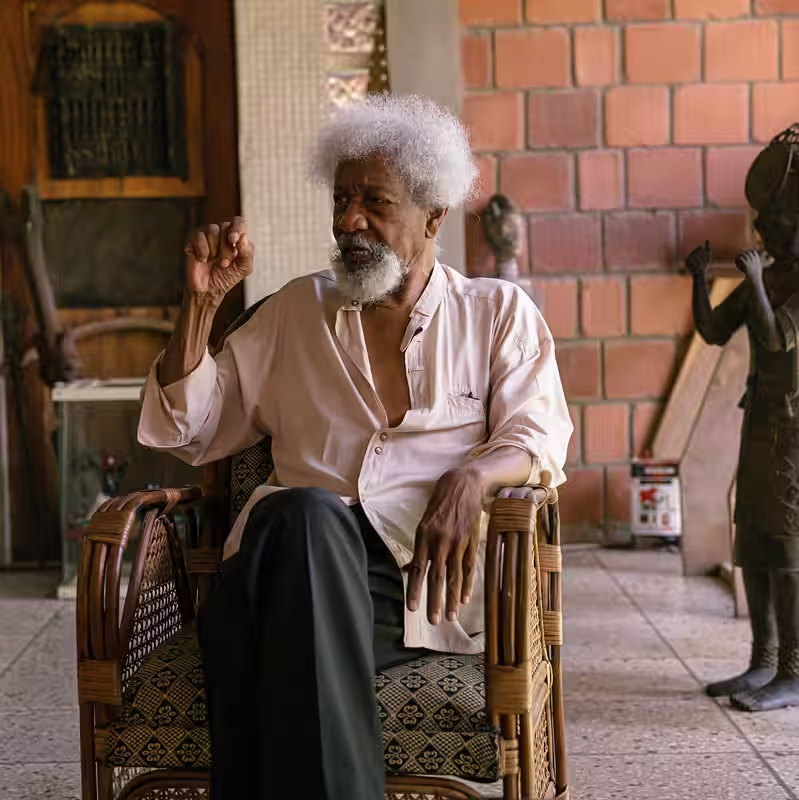
In a move drawing international attention, the United States has revoked the visa of 91-year-old Nigerian Nobel laureate Wole Soyinka. The literary giant and longtime critic of former President Donald Trump confirmed the decision during a press conference in Nigeria this week.
Wole Soyinka’s U.S. Visa Revoked: What Happened?
According to a letter dated October 23 from the U.S. Consulate General in Lagos, Soyinka’s visa—originally issued in April 2024 under the Biden administration—was rescinded after “additional information became available.” The letter did not specify what that information was.
Soyinka revealed he had been summoned for a follow-up visa interview on September 11 but chose not to attend. “It’s not about me, I’m not really interested in going back to the United States,” he said. “But a principle is involved. Human beings deserve to be treated decently wherever they are.”
A History of Political Dissent
Wole Soyinka, who won the Nobel Prize in Literature in 1986, has never shied away from political commentary. Following Donald Trump’s 2016 election victory, Soyinka famously cut up his U.S. green card in protest. In a recent interview with Nigerian outlet PM News, he compared Trump to Uganda’s former dictator Idi Amin.
His vocal opposition may have played a role in the visa revocation, though U.S. officials cited procedural grounds. A State Department spokesperson stated: “Visas are a privilege, not a right… [and] may be revoked at any time, at the discretion of the U.S. government.”
Legal Perspective on the Revocation
Stephen Yale-Loehr, a retired immigration law professor from Cornell University, noted that while recent U.S. policy changes have shortened visa durations for Nigerian citizens, Soyinka’s case appears separate. “Not showing up to an interview could have provided the State Department with a procedural reason to revoke his visa,” he explained.
What This Means for International Intellectuals
The revocation has sparked debate about freedom of expression and the treatment of global thinkers who criticize U.S. leadership. While Soyinka claims he has no desire to return to the U.S., his stance highlights growing concerns over diplomatic and immigration practices toward outspoken foreign nationals.
Timeline of Key Events
- April 2024: Soyinka granted U.S. visa under Biden administration.
- September 11, 2025: U.S. Consulate requests additional interview; Soyinka declines to attend.
- October 23, 2025: Visa officially revoked via formal letter.
- October 29, 2025: Soyinka speaks publicly about the revocation in Nigeria.
Global Reaction and Implications
Writers’ organizations and human rights advocates are closely watching the situation. While the U.S. maintains that visa decisions are confidential, critics argue that transparency is essential—especially when involving globally respected figures like Soyinka.
For now, if Soyinka wishes to travel to the United States, he must reapply for a new visa—a process he has indicated little interest in pursuing.
Sources
The New York Times: Nigerian Nobel Laureate Says the U.S. Revoked His Visa