Air pollution isn’t just a health hazard—it could be stealing seconds (or even minutes) from your marathon finish time. A major new study reveals that even modest spikes in airborne particulates significantly slow runners down, regardless of fitness level.
Table of Contents
- Key Findings from the Brown University Study
- How PM2.5 Impacts Athletic Performance
- Which Marathons Are Most Affected?
- What Runners Can Do to Mitigate Risk
- Sources
Air Pollution and Marathon Times: The Data
Researchers at Brown University analyzed more than 2.6 million marathon finish times from nine major U.S. races—including New York, Boston, and Los Angeles—spanning 17 years (2003–2019). They found a clear correlation: for every 1 microgram per cubic meter increase in PM2.5 (fine particulate matter), men ran 32 seconds slower on average, while women were 25 seconds slower .
That may not sound like much, but on a moderately polluted day—say, with PM2.5 levels at 30 µg/m³ versus a clean day at 10 µg/m³—runners could lose 10 to 15 minutes off their personal bests.
Why Air Pollution Hurts Performance
PM2.5 particles are smaller than 2.5 micrometers—so tiny they can penetrate deep into the lungs and even enter the bloodstream. This triggers inflammation, chest tightness, and reduced oxygen uptake, all of which impair endurance and pacing.
“What’s notable is that we’re looking at people who are all incredibly healthy,” said Dr. Joseph M. Braun, professor of epidemiology at Brown University. “But even among elite and recreational athletes, air pollution has a measurable, subtle effect on physiology.”
Surprisingly, faster runners were more affected—likely because they breathe more deeply and rapidly, inhaling higher doses of pollutants during peak exertion.
Marathons with the Highest Pollution Levels
Among the races studied, the Los Angeles Marathon showed the highest median PM2.5 levels and also the slowest median finish times. While LA’s hilly course and warmer climate contribute, the pollution correlation held even after adjusting for those variables.
Other cities with notable pollution impacts include Chicago and Phoenix, especially during wildfire season when smoke drifts from Canada or the western U.S.
Tips for Runners in a Polluted World
- Check air quality before race day: Use apps like AirNow or IQAir to monitor PM2.5 levels.
- Choose cleaner race locations: Some runners may opt for marathons in coastal or northern cities with historically better air.
- Avoid high-traffic training routes: Running alongside highways like Manhattan’s West Side Highway exposes you to elevated vehicle emissions.
- Train indoors on bad-air days: Treadmill sessions can preserve lung health during pollution spikes.
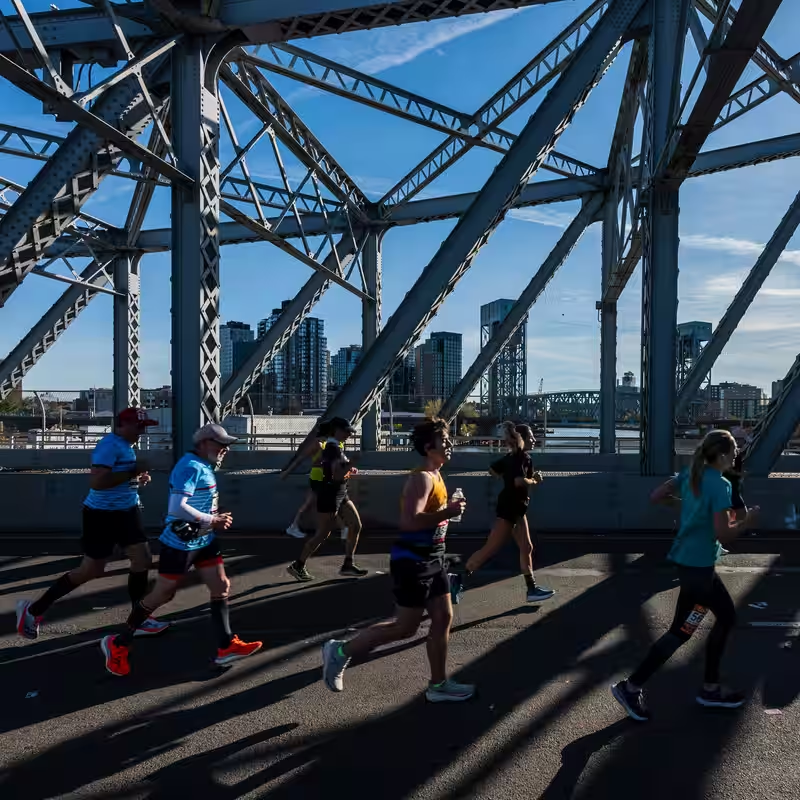
Good news for this Sunday’s New York City Marathon: air quality forecasts are currently in the “good” range, giving runners a cleaner shot at their goals.