Table of Contents
- A City on Edge
- How ICE Operations Escalated
- Community Response
- Businesses Shut Down
- Fear by the Numbers
- What Happens Next?
- Sources
A City on Edge
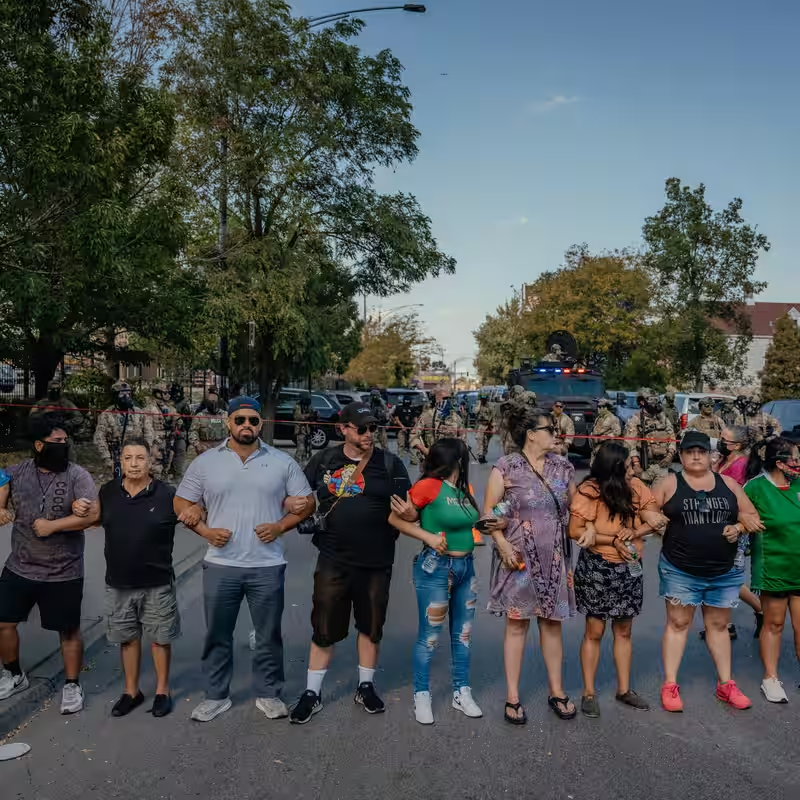
Chicago is living in fear. Across neighborhoods from Back of the Yards to Edgewater, residents are texting each other real-time ICE alerts, parents are forming human chains outside schools at dismissal, and storefronts are plastered with signs in Spanish: “ICE NO ES BIENVENIDO AQUÍ.”
What began as a quiet promise by the Trump administration to ramp up immigration enforcement has exploded into a citywide crisis. Federal agents in camouflage now patrol the Gold Coast near the Magnificent Mile. Helicopters circle residential blocks. And families are canceling gatherings—not out of caution, but terror.
“Every single person who looks brown is scared,” said Berto Aguayo, a Chicago-based immigration lawyer and community advocate. “People are being terrorized. That’s what it feels like.”
How ICE Operations Escalated
The surge began in early September with “Operation Midway Blitz,” a federal campaign targeting undocumented immigrants in the Chicago metro area. Over the past four weeks, Homeland Security claims to have arrested more than 1,000 people—though the number includes U.S. citizens mistakenly swept up in raids.
Unlike past enforcement waves, this one is highly visible. ICE agents now operate in military-style gear, often accompanied by Border Patrol units—a jarring sight in a city hundreds of miles from any international border.
“They’ve declared that the border is at the shores of Lake Michigan,” said Illinois Governor JB Pritzker, calling the federal presence an “unconstitutional invasion.”
Community Response
Neighborhoods have mobilized like never before. In Southwest Side schools, parents take turns standing guard during pickup hours. In Edgewater, a local listserv lit up with panic when a helicopter circled overhead: “Could it be ICE?” one resident asked.
On Saturday, a minor car crash involving federal agents sparked a spontaneous protest. Crowds gathered, waving anti-ICE signs as agents deployed pepper balls and tear gas. The demonstrators stayed until the officers left.
“We haven’t bothered anybody,” said Chicago Mayor Brandon Johnson. “Our economy is rebounding, violent crime is down—and now we’re being treated like a war zone.”
Businesses Shut Down
Small businesses are bearing the brunt. Many have stopped deliveries to protect Latino employees from being stopped while driving. Others have shuttered entirely.
Bagel Miller, a popular café in Logan Square, closed for the weekend with a blunt Facebook message: “We can’t ask anyone to risk their safety just to serve bagels.”
Construction sites now keep warehouse doors open so workers can spot approaching agents. Restaurant owners make their own food runs. The fear isn’t just emotional—it’s economic.
Fear by the Numbers
| Metric | Data |
|---|---|
| ICE arrests in Illinois (Jan–Jun 2025) | ~1,400 |
| ICE arrests in Illinois (Sep–Oct 2025, est.) | 1,000+ in 4 weeks |
| % arrested with no criminal record (Jan–Jun) | 60% |
| Chicago homicides (Jan–Sep 2025) | 319 — down nearly 50% from 2023 peak |
Despite falling crime rates, the Trump administration continues to describe Chicago as “probably worse than almost any city in the world”—a claim contradicted by its own FBI data.
What Happens Next?
Legal challenges are mounting. Illinois Attorney General Kwame Raoul called the ICE surge “illegal,” and a federal judge in Chicago is reviewing a request to block further National Guard deployments tied to immigration enforcement.
Meanwhile, community networks grow stronger. Mutual aid groups distribute “know your rights” flyers. Churches offer sanctuary. And neighbors keep watch—not with weapons, but with WhatsApp groups and porch lights left on late into the night.
As one Edgewater resident put it: “We’re not hiding. We’re protecting each other.”