Table of Contents
- Comey’s Aggressive Legal Pushback
- What Did Comey Allegedly Lie About?
- The Controversial Prosecutor Behind the Indictment
- Alleged Grand Jury Misconduct
- Broader Implications for Trump-Era Justice
- Sources
Comey’s Aggressive Legal Pushback
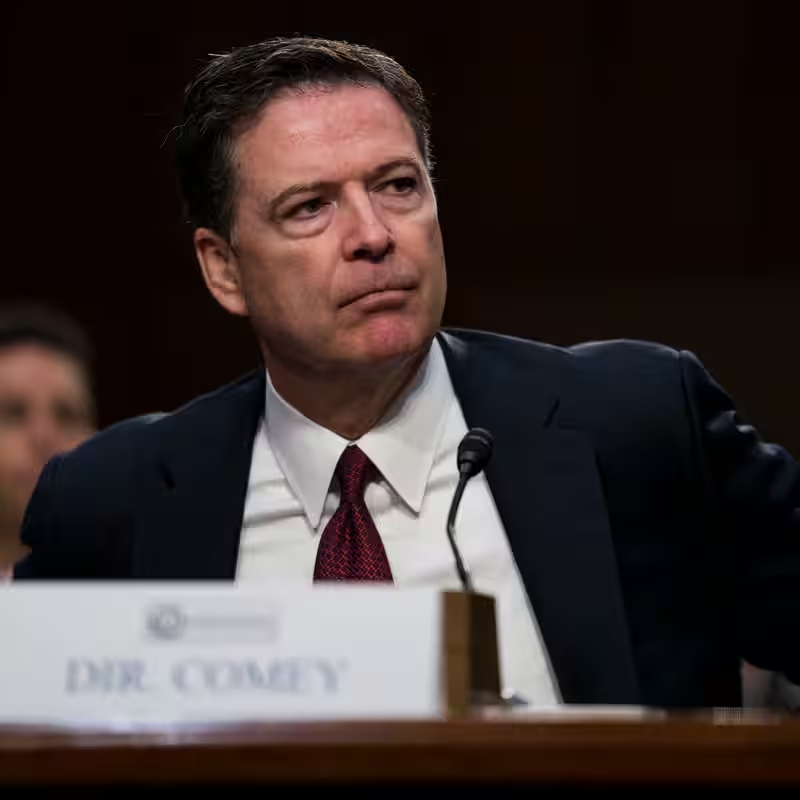
James B. Comey, the former FBI director and longtime critic of Donald Trump, has launched a blistering legal counteroffensive against his recent indictment on perjury and obstruction charges. In new court filings submitted Thursday in Alexandria, Virginia, Comey’s defense team argued the charges are legally unsound, factually inaccurate, and born from a deeply compromised prosecutorial process .
The motions mark the latest escalation in a case that has drawn national attention for its political overtones and procedural irregularities—especially given that the charges emerged only after President Trump replaced a career U.S. attorney with a loyalist who secured the indictment within days of taking office.
What Did Comey Allegedly Lie About?
The two-page indictment centers on Comey’s testimony before the Senate Judiciary Committee on September 30, 2020. During that hearing, Senator Ted Cruz (R-TX) asked whether Comey had “authorized anyone at the FBI to be an anonymous source in news reports.”
Comey replied that he had not—and the Justice Department now claims that answer was false. But Comey’s lawyers say the question was “fundamentally ambiguous” and that their client was referencing prior testimony about his deputy, Andrew McCabe, not the actual subject of the current allegation: former FBI official Daniel C. Richman.
“Comey’s answer was literally true,” the defense wrote, noting he simply reaffirmed statements he made in a 2017 hearing. “A literally true statement cannot form the basis of a perjury charge—no matter how prosecutors try to reinterpret it years later.”
The Controversial Prosecutor Behind the Indictment
Adding fuel to the fire is the identity of the prosecutor who obtained the indictment: Lindsey Halligan, a former personal attorney to Donald Trump with no prior criminal prosecution experience. Halligan, previously an insurance litigator, secured the indictment on just her fourth day in the U.S. Attorney’s office.
Comey’s legal team called this “unprecedented” and “reckless,” arguing that Halligan’s inexperience led to serious errors—including presenting two different versions of the indictment and keeping grand jurors past normal hours after they initially refused to approve one of the original charges.
Alleged Grand Jury Misconduct
The defense also alleges that the grand jury process was tainted. They claim an FBI agent who testified may have improperly disclosed privileged attorney-client communications between Comey and his lawyer. Moreover, Halligan reportedly conducted the entire grand jury presentation alone—without oversight from seasoned prosecutors, a deviation from standard Department of Justice protocol.
“It is virtually unheard-of for a brand-new prosecutor to make her first grand jury presentation alone,” the motion states. “The irregularities here are so severe they likely prejudiced the grand jurors’ decision.”
Broader Implications for Trump-Era Justice
Comey isn’t the only Trump adversary charged by Halligan. New York Attorney General Letitia James also faces separate charges brought by the same prosecutor. A hearing on November 13 will address challenges to Halligan’s appointment in both cases, presided over by visiting Judge Cameron McGowan Currie of South Carolina.
Legal scholars warn that if politically motivated prosecutions become normalized, it could erode public trust in the justice system. “This case tests whether the rule of law can withstand partisan weaponization,” said Barbara McQuade, former U.S. Attorney and University of Michigan law professor.