President Donald Trump is celebrating what he calls a “historic” breakthrough between Israel and Hamas—a deal that could finally end the two-year war in Gaza. But despite the fanfare, critical questions remain unanswered. What exactly was agreed to? Will Hamas really disarm? And when will hostages actually come home?
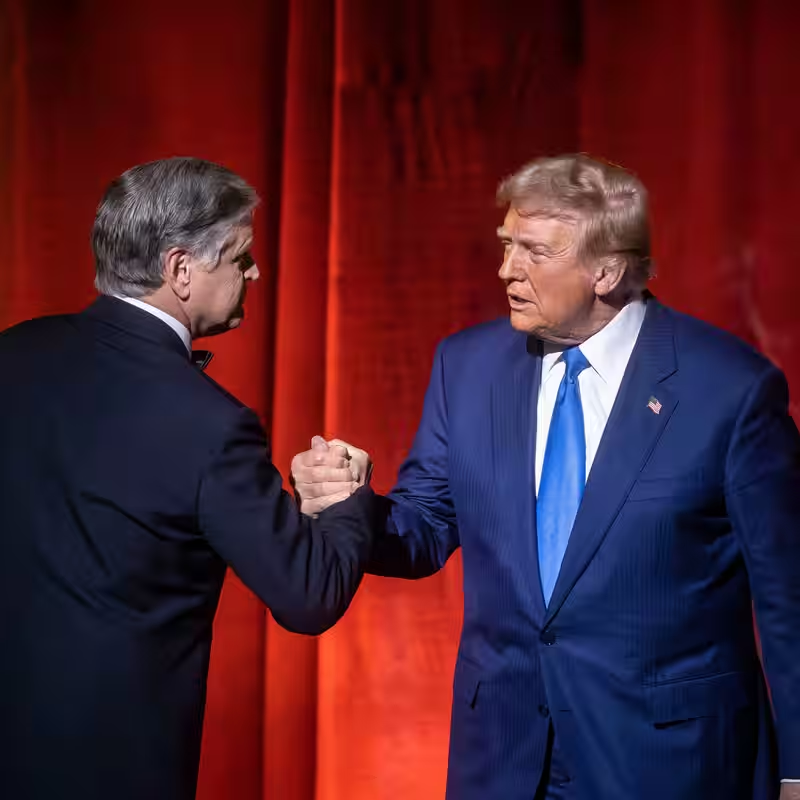
In a late-night interview with Fox News’ Sean Hannity, Trump declared victory, saying, “The whole world came together around this deal.” Yet he spent more time touting tariffs and National Guard deployments than explaining the terms of the Israel-Hamas deal.
What We Know So Far About the Israel-Hamas Deal
According to U.S. officials and public statements from both sides, the first phase of the agreement includes:
- All ~20 living Israeli hostages in Gaza will be released at once—possibly as early as Sunday.
- The remains of up to 28 deceased hostages will be returned in stages.
- In exchange, Israel will release 250 Palestinian prisoners serving life sentences and 1,700 Gazans detained since October 7, 2023.
- For every Israeli body returned, Israel will hand over the remains of 15 deceased Gazans.
- Israeli troops will pull back from parts of Gaza to an “agreed-upon line”—though that line hasn’t been disclosed.
Crucially, neither Israel nor Hamas has confirmed whether Hamas will disarm—a core Israeli demand and a major sticking point for years.
Trump’s 20-Point Plan: Vision vs. Reality
The framework stems from Trump’s 20-point peace proposal unveiled on September 29 at the White House, with Israeli Prime Minister Benjamin Netanyahu standing beside him. The plan envisions:
- Gaza as a “de-radicalized, terror-free zone”
- Hamas removed from governance and replaced by a “technocratic, apolitical Palestinian committee”
- A U.S.-led “Board of Peace,” chaired by Trump with Tony Blair as co-leader
- A temporary “International Stabilization Force” to secure borders and train Palestinian police
- No forced displacement of Gazans—and no Israeli annexation
But while Netanyahu called the deal a “national and moral victory,” Hamas’s statement made no mention of disarming or relinquishing power—raising doubts about long-term viability.
Why Did Hamas Suddenly Agree?
The breakthrough followed intense pressure. On October 4, Trump issued a blunt ultimatum: “Many more of your fighters will be killed if you don’t agree by Sunday.”
Hamas responded the same day, agreeing in principle—but requesting negotiations on implementation. That small opening, combined with behind-the-scenes talks in Sharm el-Sheikh, Egypt, involving U.S. envoy Steve Witkoff, Jared Kushner, Qatar’s prime minister, and Israeli adviser Ron Dermer, appears to have sealed the deal.
A key turning point? Israel’s September 9 airstrike on a residential area in Doha, Qatar—home to Hamas negotiators. Though no one died, the move angered U.S. allies and reportedly pushed Trump to force Netanyahu’s hand.
Table: What’s Confirmed vs. What’s Missing in the Israel-Hamas Deal
| Confirmed Elements | Unanswered Questions |
|---|---|
| ~20 living hostages to be released | Will Hamas actually disarm? |
| Prisoner exchange numbers | Exact line of Israeli troop withdrawal? |
| Israeli troop pullback (in principle) | Who will govern Gaza post-Hamas? |
| Aid will enter Gaza | Timeline for full implementation? |
| Deal brokered via Egypt & Qatar | Will the “Board of Peace” have real authority? |
Families React: Hope Mixed with Caution
For families of hostages, the news sparked tears of relief—but also anxiety. “I am faithful that I will be able to see my brother’s smiling face,” said Pushpa Joshi, whose brother Bipin, a Nepali student, was taken on October 7, 2023.
Still, the Hostages and Missing Families Forum warned: “Any delay could exact a heavy toll on the hostages and soldiers.”
What Comes Next?
Netanyahu is set to convene his cabinet to formally approve the deal. Meanwhile, Trump is already claiming credit for “peace in the Middle East”—even as the fine print remains elusive.
One thing is clear: the world is watching. And for the people of Gaza and Israel, the difference between a real peace and another broken promise could be a matter of life and death.