Table of Contents
- Sanctions Suddenly Lifted
- Who Is Milorad Dodik?
- The Trump-Aligned Lobbying Push
- Geopolitical Fallout and Concerns
- U.S. Agencies Stay Silent
- Sources
Sanctions Suddenly Lifted
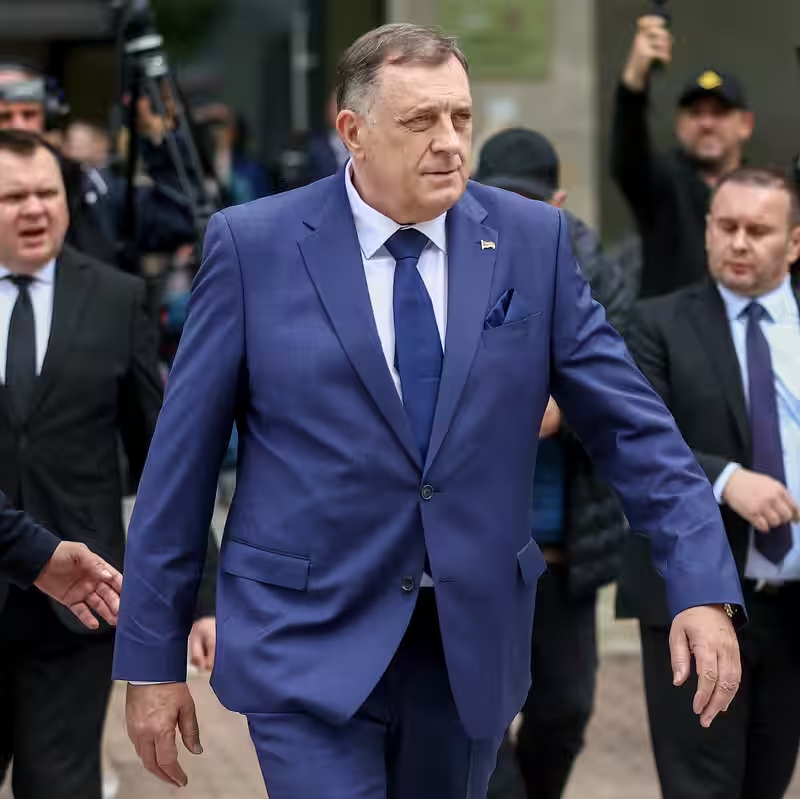
Milorad Dodik, a Serbian nationalist leader long accused of destabilizing the Balkans and aligning closely with Vladimir Putin, is no longer under U.S. sanctions. The Trump administration announced the reversal on Wednesday, October 29, 2025—ending penalties that had targeted Dodik, his family members, and affiliated businesses since the Obama and Biden eras.
The move comes after a sustained and well-funded lobbying campaign by prominent Trump allies, including Rudy Giuliani, Michael T. Flynn, and far-right activist Laura Loomer. Though the Treasury Department issued no public justification, Dodik wasted no time claiming victory on social media, calling the sanctions an “injustice” imposed by previous Democratic administrations.
Who Is Milorad Dodik?
Milorad Dodik served as president of Republika Srpska—the Serb-majority entity within Bosnia and Herzegovina—until earlier this month. Known for his secessionist rhetoric and repeated efforts to undermine Bosnia’s central government, Dodik has been a thorn in the side of Western diplomats since the 1990s Dayton Peace Accords ended the Bosnian War.
U.S. officials previously accused him of running a “corrupt patronage network” and using state resources to enrich allies while eroding democratic institutions. His close ties to Moscow have only deepened concerns among NATO and EU officials, especially as Russia seeks to expand its influence in the Balkans.
The Trump-Aligned Lobbying Push
Behind the scenes, Dodik’s sanctions relief was no accident. Court records and lobbying disclosures reveal a coordinated effort by high-priced Washington operatives working in tandem with Giuliani, Flynn, and Loomer—all of whom have promoted pro-Serb, anti-NATO narratives in recent years.
Giuliani, once President Trump’s personal lawyer, has cultivated relationships with Balkan leaders since leaving the White House. Flynn, a former national security adviser pardoned by Trump, has pushed conspiracy-laden foreign policy views that often align with Russian interests. Loomer, a controversial online personality, has amplified Dodik’s cause through right-wing media channels.
While the exact cost of the lobbying campaign remains unclear, filings show millions spent on U.S. firms specializing in sanctions removal—a strategy increasingly common among foreign autocrats seeking favor in Washington.
Geopolitical Fallout and Concerns
Analysts warn the decision could embolden other authoritarian figures to seek similar relief through political connections rather than policy reform. “This isn’t just about Dodik—it’s about signaling that sanctions are negotiable if you have the right friends in D.C.,” said Dr. Elena Marković, a Balkans expert at Georgetown University.
EU diplomats expressed alarm, noting that Dodik’s Republika Srpska has already taken steps to create a separate army and judiciary—moves that violate the Dayton Agreement. With U.S. pressure now lifted, critics fear Bosnia could slide back toward ethnic fragmentation.
U.S. Agencies Stay Silent
Despite the high-stakes implications, neither the Treasury nor the State Department offered an explanation for the policy shift. A Treasury spokesperson declined to comment, and the State Department did not respond to repeated inquiries.
This silence has fueled speculation that the move was politically motivated—part of a broader realignment of U.S. foreign policy under Trump’s second-term agenda, which has shown increasing skepticism toward multilateral institutions and traditional alliances.