Devastation in Mindanao: Shelter Emergency Declared After Powerful Quake
In the wake of a catastrophic earthquake that struck the southern Philippines, President Ferdinand Marcos Jr. has issued an urgent appeal for tens of thousands of tents to shelter survivors left homeless in remote and severely damaged communities .
Current Situation on the Ground
As of Thursday, October 3, 2025, Philippine officials expressed cautious optimism that most of the missing have been accounted for. However, the scale of destruction has created a humanitarian emergency, with widespread shortages of shelter, clean water, and electricity across affected regions—particularly in parts of Mindanao .

Immediate Needs Identified by Authorities
- Emergency Shelter: Over 20,000 families require temporary housing; tents are the top priority.
- Clean Water & Sanitation: Water systems damaged; risk of disease outbreaks rising.
- Power Restoration: Grid infrastructure heavily compromised in rural barangays.
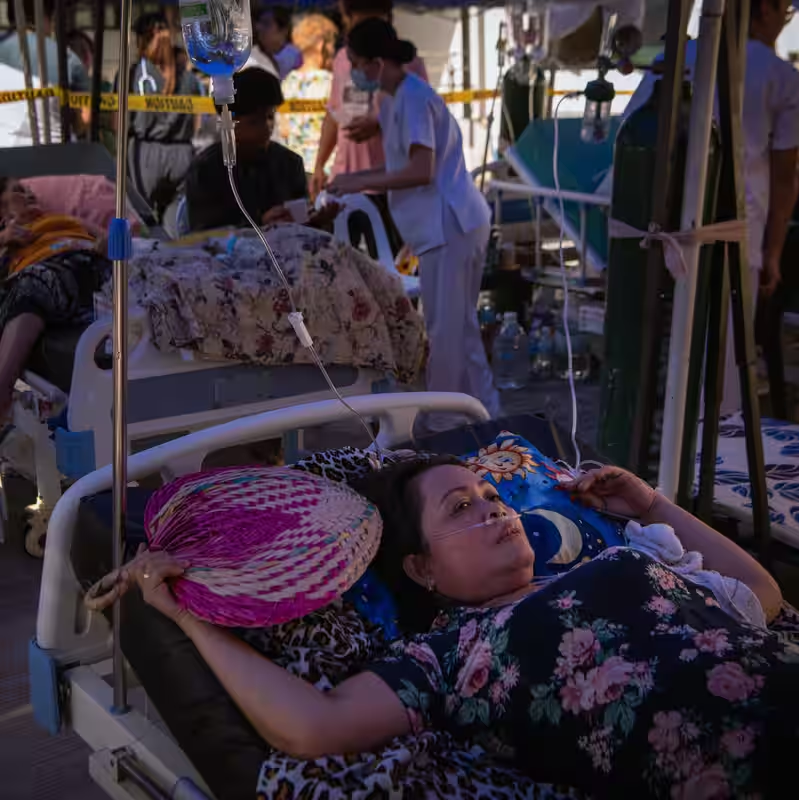
- Medical Aid: Field hospitals being deployed for injured and vulnerable populations.
Disaster Response Snapshot
| Category | Status (as of Oct 3, 2025) | Source |
|---|---|---|
| Reported Missing | Most accounted for; final verification ongoing | Philippine National Disaster Risk Reduction Council |
| Displaced Persons | Estimated 100,000+ | Office of the Presidential Adviser on Recovery |
| Areas Without Power | 12 municipalities in Cotabato and Davao regions | National Grid Corporation of the Philippines |
| International Aid Offered | Japan, Australia, and ASEAN partners pledged support | Department of Foreign Affairs |
Government Mobilization
President Marcos has activated the National Disaster Risk Reduction and Management Council (NDRRMC) at its highest operational level. Military and coast guard units are assisting with logistics, while the Department of Social Welfare and Development (DSWD) is distributing food packs and hygiene kits .
“We cannot wait,” Marcos stated in a televised address. “Every hour without shelter increases the risk to our people—especially children and the elderly.”
Long-Term Recovery Challenges
Beyond immediate relief, experts warn that rebuilding resilient infrastructure in seismically active zones will require years and billions in investment. Geologists note the region sits near the Cotabato Trench, a known source of high-magnitude quakes .