Ten months after the fall of Bashar al-Assad’s regime, Syria held its first parliamentary elections since the end of its devastating civil war. But while some hail the vote as a historic step toward democracy, others warn it may be less about representation—and more about consolidation of power by President Ahmed al-Shara.
A Nation at a Crossroads
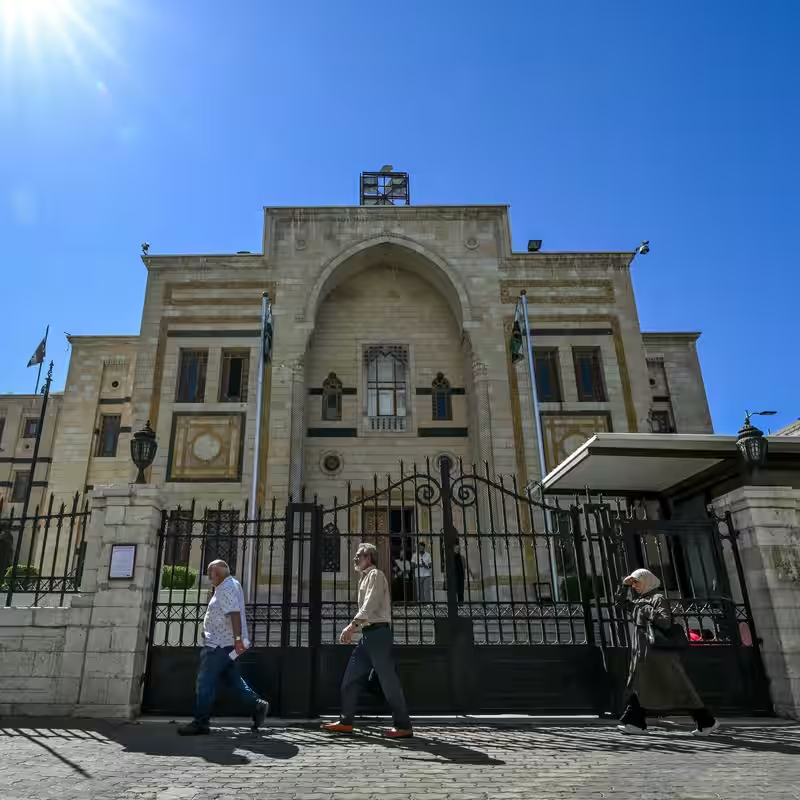
On Sunday, polling stations opened in parts of Syria still reeling from over a decade of conflict. The election marks the first time Syrians have had a chance to shape a new legislature since rebel forces, led by al-Shara’s coalition, toppled the Assad dynasty that ruled for more than 50 years.
Yet the process is far from universal. Entire regions—including Kurdish-administered areas in the northeast and the Druse-majority province of Sweida—won’t participate due to ongoing instability and political exclusion.

How the Election Works—And Why It’s Controversial
Syrians aren’t voting for individual candidates. Instead, they’re casting ballots for party lists in a system the transitional government says is necessary due to “administrative challenges”—including widespread displacement and lack of official ID documents.
Even more contentious: President al-Shara will directly appoint one-third of the 210 parliamentary seats. Critics argue this undermines the very notion of democratic representation.
Key Facts About Syria’s 2025 Parliamentary Vote
| Detail | Information |
|---|---|
| Total Seats | 210 |
| Elected by Public | 140 (approx. 67%) |
| Appointed by President | 70 (33%) |
| Regions Excluded | Northeast (Kurdish zones), Sweida Province |
| Voting Method | Party-list proportional representation |
Hope vs. Skepticism
Supporters see the election as a fragile but vital foundation for rebuilding state institutions. “After 50 years of dictatorship, any step toward a pluralistic system matters,” said one Damascus-based civil society organizer who asked to remain anonymous.
But opposition figures and international watchdogs are wary. “This isn’t democracy—it’s authoritarianism with ballots,” said a regional analyst with the International Crisis Group. “Al-Shara is using the language of reform to cement control.”
[INTERNAL_LINK:Post-Conflict Governance] experts note that while inclusive parliaments can stabilize war-torn states, legitimacy hinges on transparency, participation, and checks on executive power—elements largely absent here.
What Comes Next?
The newly formed parliament is expected to draft a new constitution and approve key ministries. But with al-Shara holding significant appointment powers and large swaths of the country excluded from the process, questions remain: Will this body reflect Syria’s diverse communities—or serve as a rubber stamp?
For millions of displaced Syrians watching from refugee camps in Jordan, Lebanon, and Turkey, the answer may determine whether they ever feel safe enough to return home.
Sources
The New York Times: “Syria Holds First Parliamentary Elections Since End of Civil War”