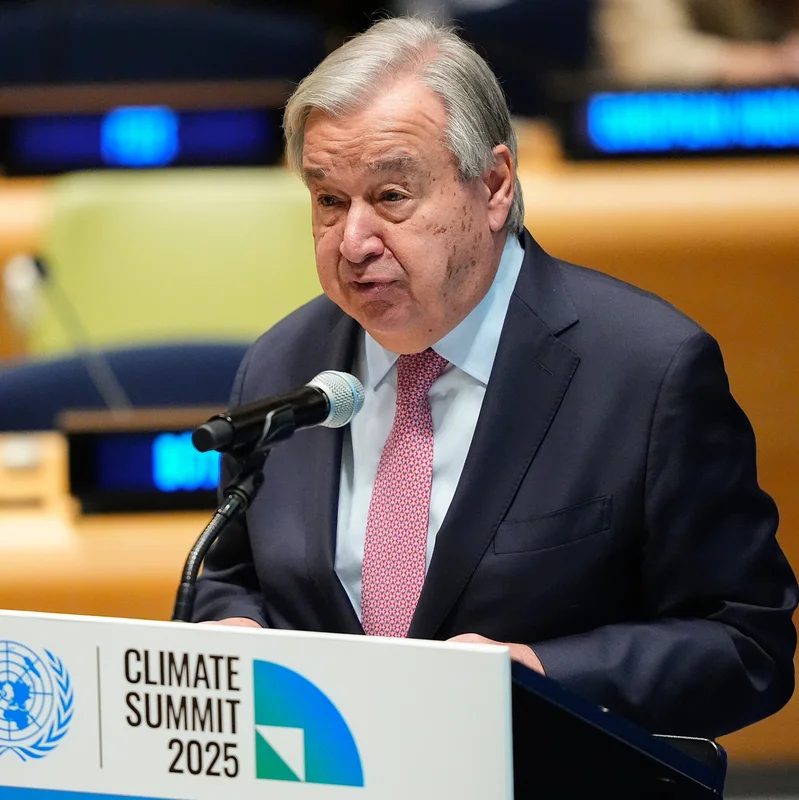
On September 24, 2025, the United Nations Security Council issued a stark warning about the rapid and unregulated advancement of artificial intelligence, marking one of its most urgent public interventions on the technology to date. During a high-level session at the U.N. General Assembly, diplomats and experts from over 50 nations convened to address AI’s dual potential—as a tool for global progress and a vector for unprecedented risk.
Why the Alarm Now?
Recent breakthroughs in generative AI, autonomous weapons, and deepfake disinformation have outpaced existing regulatory frameworks. The Council emphasized that without coordinated global governance, AI could destabilize elections, escalate military conflicts, and deepen socioeconomic inequality—particularly in developing nations.
Top AI Risks Identified by the Security Council
- Autonomous Weapons: Lethal AI systems that select and engage targets without human oversight.
- Disinformation Campaigns: Hyper-realistic deepfakes manipulating public opinion during elections.
- Cyber Warfare: AI-powered attacks on critical infrastructure (power grids, hospitals, financial systems).
- Global Inequality: Concentration of AI development in a few wealthy nations, marginalizing the Global South.
Global AI Governance: Where Do Nations Stand?
| Region/Country | AI Regulatory Approach | Status (2025) |
|---|---|---|
| European Union | AI Act (risk-based classification) | Enforced since 2024 |
| United States | Executive Orders + Sectoral Guidelines | Draft federal AI bill under review |
| China | State-controlled AI development with strict content rules | Active enforcement since 2023 |
| Global South | Limited regulatory capacity | Calling for U.N.-led support |
A Call for a Global AI Compact
The Security Council backed the Secretary-General’s proposal for a Global Digital Compact—a binding international framework to govern AI development, deployment, and accountability. Key pillars include:
- Ban on fully autonomous weapons without meaningful human control.
- Mandatory transparency for training data and algorithmic decision-making.
- Equitable access to AI infrastructure and talent development for low-income countries.
- Rapid-response task force to counter AI-enabled disinformation during crises.
Can global cooperation outpace AI’s risks?
North American Implications
For U.S. and Canadian readers, the U.N. warning arrives amid growing domestic scrutiny:
- The U.S. Senate held AI safety hearings in August 2025.
- Canada’s AI and Data Act is set to take full effect in early 2026.
- Major tech firms—including those based in Silicon Valley—are under pressure to adopt “AI red-teaming” protocols.
Experts warn that without international alignment, national regulations may be circumvented through offshore AI deployment.
For deeper insights into responsible innovation, explore our guide on [INTERNAL_LINK:ethical-ai-development].
For official U.N. policy documents and updates, visit the U.N. AI Advisory Body.
Sources
- https://www.nytimes.com/live/2025/09/24/world/un-general-assembly-ukraine/un-security-council-raises-the-alarm-on-the-potential-dangers-of-ai
- https://www.un.org/en/ai-advisory-body
- https://digital-strategy.ec.europa.eu/en/policies/regulatory-framework-ai
- https://www.whitehouse.gov/ostp/news-updates/2025/08/ai-safety-summit-outcomes/
- https://www.brookings.edu/topic/artificial-intelligence/