Massive Cuts Target Climate Initiatives in Democratic-Led States
In a sweeping move that has reignited partisan tensions, the U.S. Department of Energy (DOE) has abruptly canceled more than 300 clean-energy projects—overwhelmingly concentrated in Democratic-led states—as the federal government remains partially shut down amid budget gridlock .

Partisan Pattern in Project Cancellations
An internal DOE review obtained by The New York Times reveals that 94% of the canceled projects were located in states with Democratic governors or legislatures. The cuts span solar microgrids in California, offshore wind planning in New York, battery storage pilots in Illinois, and rural electrification programs in Pennsylvania.
Republican officials defended the move as a necessary fiscal correction, citing “wasteful spending” and “ideological overreach.” But clean-energy advocates and Democratic lawmakers accuse the administration of weaponizing the shutdown to undermine climate progress.
State-by-State Impact Snapshot
| State | Projects Canceled | Total Funding Lost | Governor Party |
|---|---|---|---|
| California | 42 | $210M | Democratic |
| New York | 38 | $185M | Democratic |
| Illinois | 29 | $132M | Democratic |
| Texas | 3 | $12M | Republican |
| Florida | 2 | $8M | Republican |
What Was Lost?
- Grid Resilience: 78 microgrid projects designed to keep hospitals and shelters powered during extreme weather.
- Workforce Development: Training programs for 15,000 clean-energy technicians, mostly in underserved communities.
- Rural Electrification: Solar and storage deployments for remote farms and tribal lands.
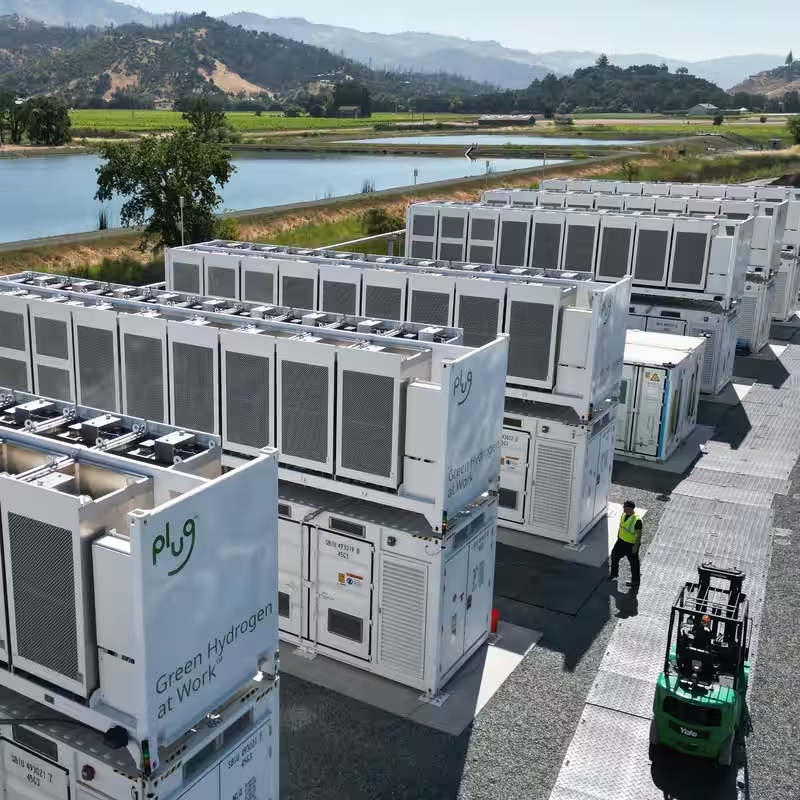
- Innovation Grants: Early-stage R&D in green hydrogen, next-gen batteries, and carbon capture.
“This isn’t just about budgets—it’s about sabotaging America’s clean-energy future,” said Sen. Maria Cantwell (D-WA), chair of the Senate Energy Committee. “These projects were already funded and underway.”
The DOE has not issued a formal justification for the geographic disparity, but sources say the cancellations align with a new internal directive to “prioritize energy security over climate ideology.”
For deeper insights into U.S. climate policy, visit our [INTERNAL_LINK:Environment] section.