Table of Contents
- FBI Agents Fired Over Trump Investigation Ties
- Who Is Kash Patel—and Why Is He Taking This Step?
- Senator Grassley’s Role in the Purge
- Article II and the Controversial ‘Without Cause’ Firings
- Fallout: Fear, Retaliation, and a Fractured Bureau
- What This Means for U.S. Law Enforcement
- Sources
FBI Agents Fired Over Trump Investigation Ties
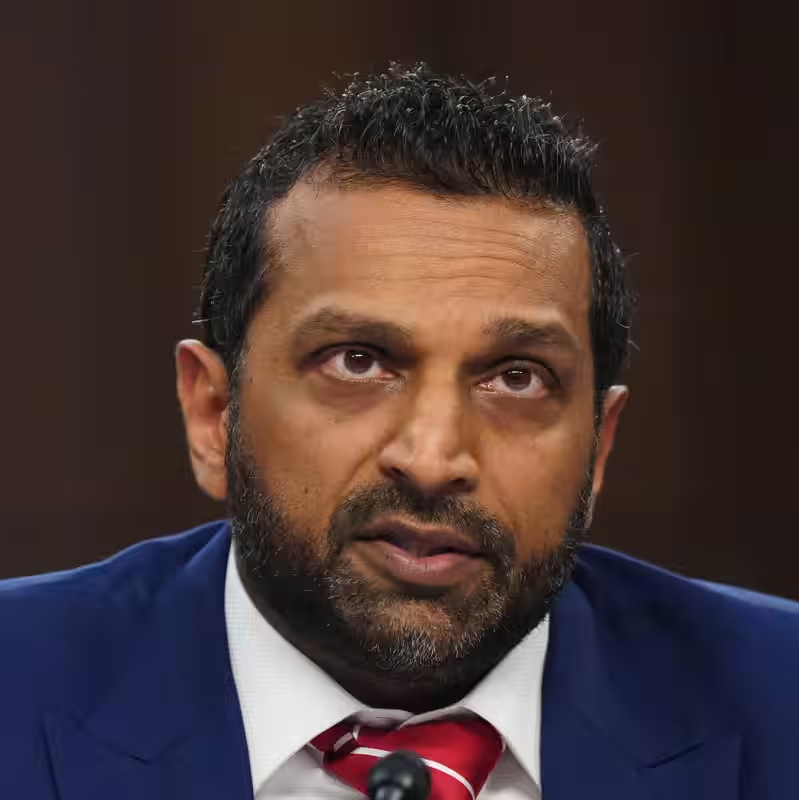
In a move that has reignited debate over political interference in federal law enforcement, FBI Director Kash Patel has fired two veteran agents who were identified as having worked with former special counsel Jack Smith on investigations into Donald J. Trump.
Neither agent faced formal misconduct allegations or internal investigations. Both had strong performance records—one was a decorated Iraq War veteran just months from retirement. Yet this week, they were abruptly dismissed, with Patel citing sweeping executive authority under Article II of the U.S. Constitution.
Who Is Kash Patel—and Why Is He Taking This Step?
Kash Patel, a former Trump aide and Pentagon official, was appointed FBI director early in Trump’s second term. Known for his loyalty to the former president, Patel has made “depoliticizing” the bureau a centerpiece of his tenure—though critics argue his actions are doing the opposite.
This isn’t the first time Patel has removed agents tied to the Trump probes. In August, he fired Chris Meyer and Walter Giardina, also from the Washington field office’s special investigations unit. That move led to the resignation—and later lawsuit—of Steven J. Jensen, the office’s former head, who called the firings “retaliatory and unjust.”
Senator Grassley’s Role in the Purge
The latest dismissals follow documents obtained by Senator Chuck Grassley (R-Iowa), chairman of the Senate Judiciary Committee. Those records identified the agents as associates of Jack Smith’s team.
Grassley has been a vocal critic of what he calls the “weaponization” of the Justice Department under Biden. Working closely with the Trump administration, he’s pushed for accountability—but many of the targeted agents were simply assigned to cases by supervisors, with no control over their investigative roles.
Article II and the Controversial ‘Without Cause’ Firings
Patel has repeatedly invoked Article II—the section of the Constitution that vests executive power in the president—as justification for firing federal employees “without cause.” Legal scholars are divided on whether this applies to career civil servants like FBI agents, who typically enjoy protections under the Civil Service Reform Act.
“This isn’t about performance—it’s about punishment,” said one former DOJ official who spoke on condition of anonymity. “And it sends a chilling message to anyone who might investigate a powerful person in the future.”
Fallout: Fear, Retaliation, and a Fractured Bureau
Fear is spreading within FBI ranks. The fired agents have reportedly received threats from Trump supporters, prompting requests that their names not be made public.
For the Iraq veteran, the dismissal could mean losing his government pension—a devastating blow after decades of service. “He served in Fallujah and came home to serve his country again,” said a colleague. “Now he’s being treated like a traitor for doing his job.”
What This Means for U.S. Law Enforcement
These firings are more than personnel decisions—they signal a broader shift in how the Trump administration views independent law enforcement. With Patel at the helm, the FBI risks becoming perceived not as a neutral investigative body, but as an extension of political power.
As one legal analyst put it: “If agents fear retribution for investigating the powerful, who will hold the powerful accountable?”
Sources
The New York Times: Kash Patel Fires Two F.B.I. Agents Who Worked on Trump Investigation
NBC News: FBI Director Patel Dismisses Agents Linked to Jack Smith Probe
U.S. Department of Justice: Official Statements (Archived)