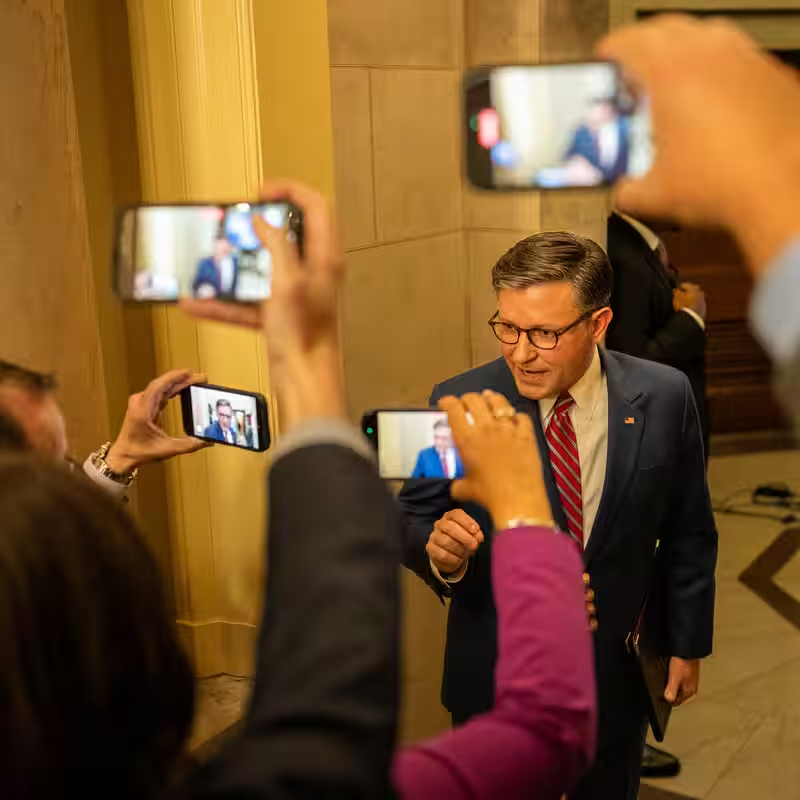
Tensions boiled over inside the U.S. Capitol this week as a government shutdown collided with lingering questions about political accountability—sparking a rare, heated confrontation between Democratic senators and House Speaker Mike Johnson.
According to a report from The New York Times, two Democratic senators directly challenged Johnson over his refusal to swear in a newly elected House member during the ongoing funding lapse. The dispute, which unfolded in a Capitol hallway, quickly escalated from procedural debate to a pointed exchange about ethics, transparency, and the shadow of the Jeffrey Epstein scandal.
What Triggered the Confrontation?
The immediate flashpoint was Speaker Johnson’s decision to delay swearing in Representative-elect Lena Morales (D-CA), whose district certified her win weeks ago. While House rules technically allow the Speaker discretion during a government shutdown, Democrats argue the move is unprecedented—and politically motivated.
“You’re holding a duly elected representative hostage because you don’t like the optics?” Senator Tammy Duckworth reportedly asked Johnson, according to sources familiar with the exchange.
But the conversation didn’t stop at procedure. One senator explicitly raised concerns about Johnson’s past legal work—particularly his involvement in cases tied to associates of Jeffrey Epstein—implying that his judgment on matters of integrity should be scrutinized.
Epstein Connection: Why It’s Resurfacing Now
Though Johnson has repeatedly distanced himself from Epstein, records show that during his time as a lawyer in Louisiana, his firm represented clients with documented ties to the disgraced financier. While no evidence links Johnson directly to Epstein’s crimes, critics say his past associations warrant greater transparency—especially when he’s making decisions that affect democratic representation.
“If we’re going to talk about who’s fit to uphold the oath of office,” Senator Cory Booker was quoted as saying, “we need full disclosure—not silence.”
Shutdown Politics or Constitutional Duty?
Republicans defend Johnson’s stance, arguing that swearing in new members during a shutdown could complicate budget negotiations or set an unwanted precedent. “This isn’t personal—it’s about process,” said one GOP aide.
But constitutional scholars counter that the right to representation shouldn’t be held hostage to fiscal disputes. “The people of California’s 38th District voted. Their voice shouldn’t be muted because of a funding impasse in another chamber,” said Dr. Elena Martinez, a government professor at Georgetown University.
What Happens Next?
As the shutdown enters its fifth day, pressure is mounting on Johnson to reverse course. Progressive groups have launched a petition demanding Morales be seated immediately, while bipartisan calls for a special House session grow louder.
Meanwhile, Morales remains in Washington, ready to take her oath—but locked out of the chamber by a procedural barrier few saw coming.